CC0 · no rights reserved
Kesa
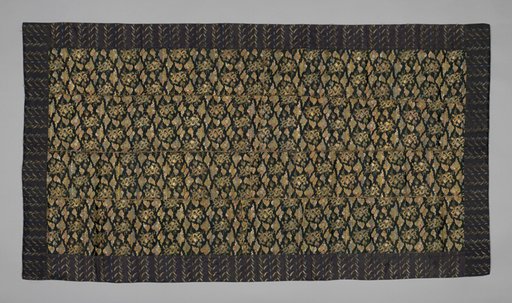
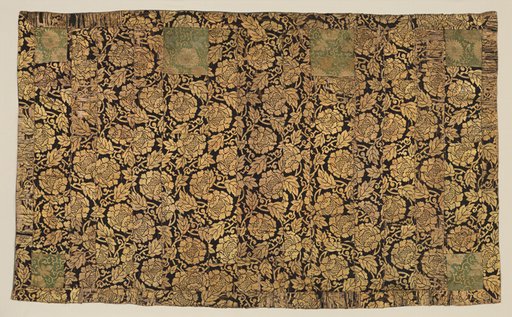
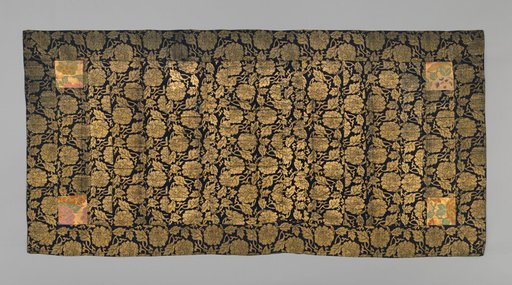
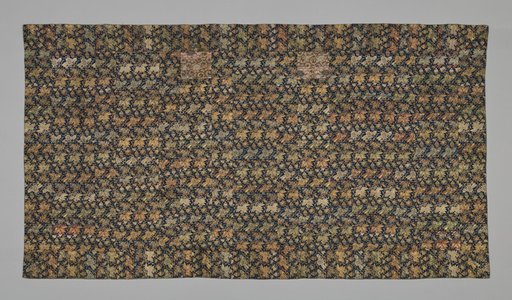
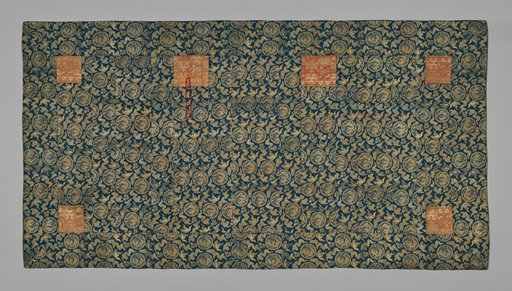
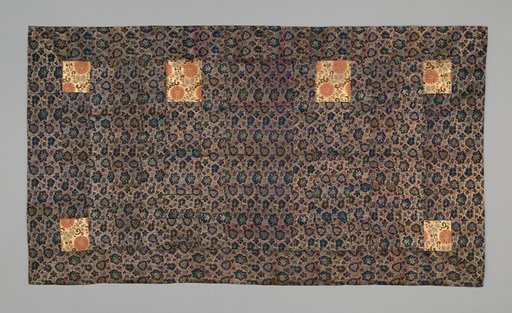
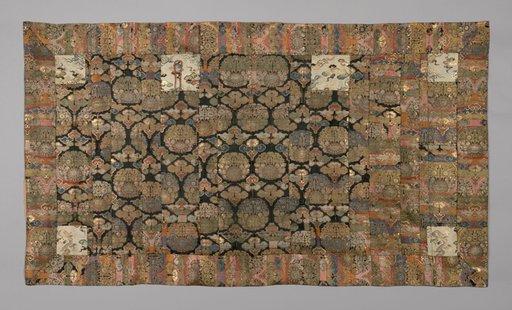
Japan · Edo period (1615–1868)/ Meiji period (1868–1912), late 18th/early 19th century · Priest robe (kesa)? larger than usual and made in strips set together by conching in gold thread in scrolls. Of kinran fancy compound satin of silk and gilded paper strips cut very finely. Design in blue, red, green, brown, yellow and white on a dark blue ground, r epresents five-clawed dragons, flaming yewels and floating clouds. It is bordered with blue brocaded silk with leaf and flower design; lined with heavy cotton.
Priest robe (kesa)? Larger than usual and made in strips set together by conching in gold thread in scrolls. Of kinran fancy compound satin of silk and gilded paper strips cut very finely. Design in blue, red, green, brown, yellow and white on a dark blue ground, r epresents five-clawed dragons, flaming jewels and floating clouds. It is bordered with blue brocaded silk with leaf and flower design and lined with heavy cotton.
From the collection of Art Institute of Chicago.
Free to download, adapt and use — no permission needed.
Credit lineKesa. Edo period (1615–1868)/ Meiji period (1868–1912), late 18th/early 19th century. Japan. The Art Institute of Chicago, Gift of Martin A. Ryerson. CC0.