CC0 · no rights reserved
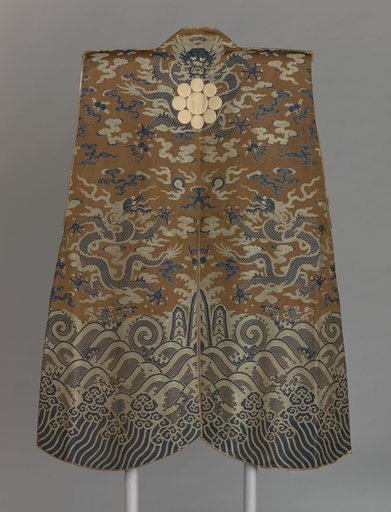
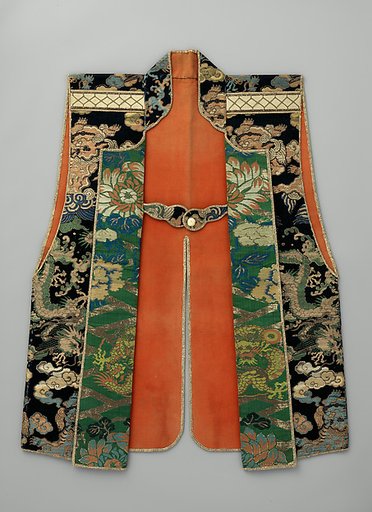
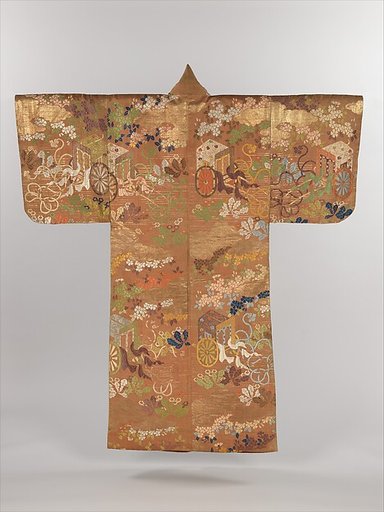
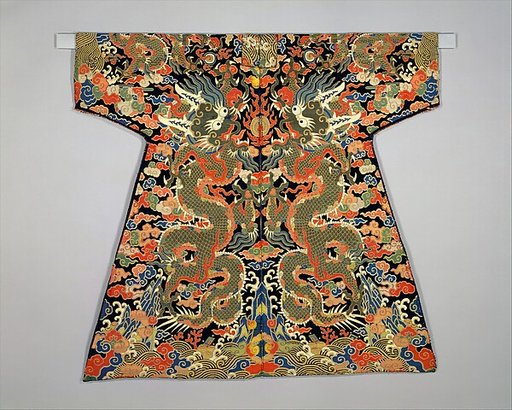
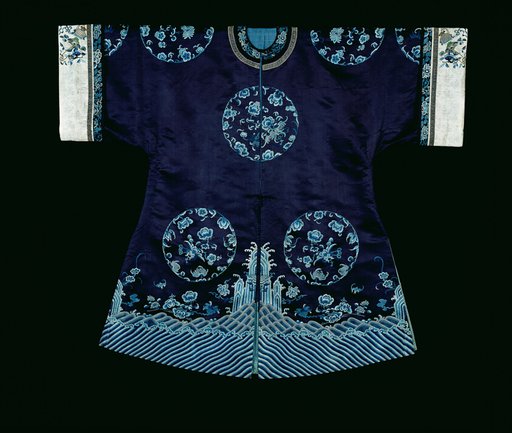
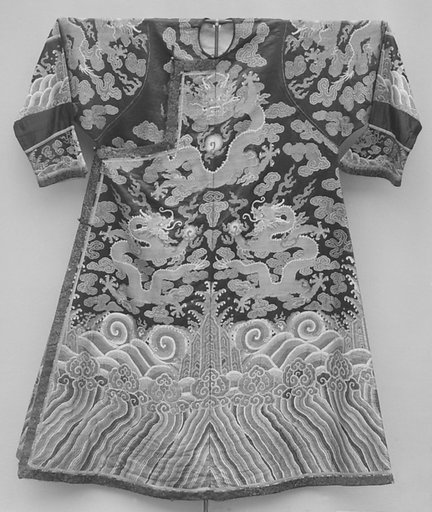
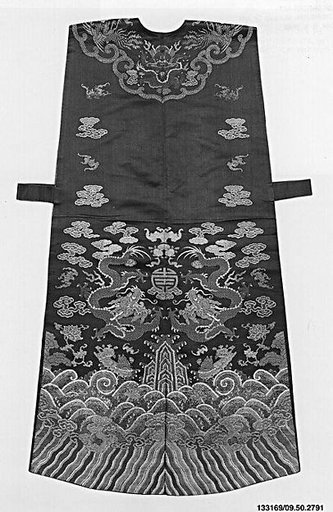
Jinbaori (Surcoat)
Japan · Edo period (1615–1868), c. 1750 · Silk, warp-float faced 2:1 'Z' twill weave with weft-float faced 1:2 'S' twill interlacings of secondary binding warps and supplementary patterning wefts with painted details; mon: wool, plain weave, fulled; lined with: silk and metal-foil-over-lacquered-paper strips, warp-float-faced 4:1 satin with supplementary brocading wefts bound by main warps in weft-float-faced 1:4 satin interlacings; edged with silk and gilt-silver-over-lacquered-paper strips, 4:1 'Z' twill weave with supplementary patterning warps and wefts; kikkô: silk and silvered-metal strips, plain weave with supplentary patterning wefts; embroidered with silk and gold-leaf-over-lacquered-paper-strip-wrapped silk in laid work and couching; edged with silk, plain weave with supplementary patterning warps and silk and gold-leaf-over-lacquered-paper strip, satin or twill weave with weft-float faced 1:2 twill interlacings of secondary binding warps and supplementary patterning wefts; all edgings wrapped over rolled paper and center backed by paper; silk tubular 1:1 oblique interlacing cord; knotted
From the collection of Art Institute of Chicago.
Free to download, adapt and use — no permission needed.
Credit lineJinbaori (Surcoat). Edo period (1615–1868), c. 1750. Japan. The Art Institute of Chicago, Gift of Mary V. and Ralph E. Hays. CC0.