CC0 · no rights reserved
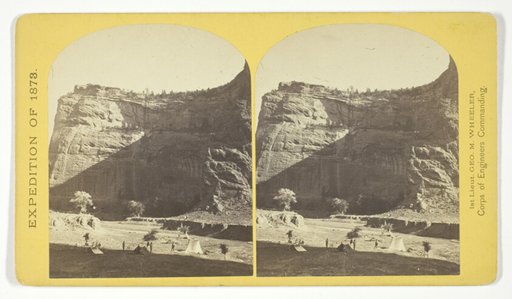
Circle Walls, Cañon de Chelle. Here the Cañon bends from an easterly direction nearly due north, the walls maintaining a perpendicular height of about 1.200 feet, No. 22 from the series "Geographical Explorations and Surveys West of the 100th Meridian"
From the collection of Art Institute of Chicago. Free to download, adapt and use — no permission needed.
Credit lineCircle Walls, Cañon de Chelle. Here the Cañon bends from an easterly direction nearly due north, the walls maintaining a perpendicular height of about 1.200 feet, No. 22 from the series "Geographical Explorations and Surveys West of the 100th Meridian". 1873. Timothy O'Sullivan (American, born Ireland, 1840–1882), commissioned by George Wheeler for the War Department, Corps of Engineers, U.S. Army. The Art Institute of Chicago, Photography Gallery Fund. CC0.
Similar works
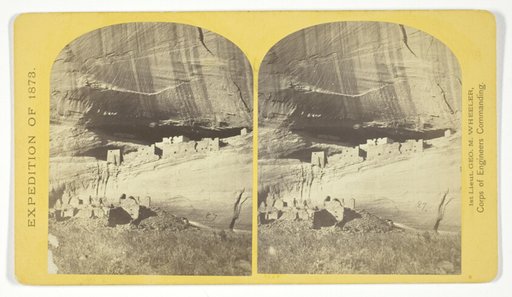 Ruins in Cañon de Chelle, N. M., in a cavity in the wall, 60 feet above present bed of Cañon. Height of walls about 700 feet. The present race of Indians know nothing of the age of these buildings of who occupied them, No. 21 from the series "Geographical Explorations and Surveys West of the 100th Meridian"
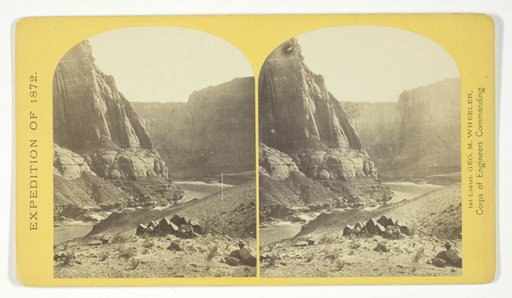 Mouth of the Paria, Colorado River; walls 2.100 feet in height, No. 11 from the series "Geographical Explorations and Surveys West of the 100th Meridian"
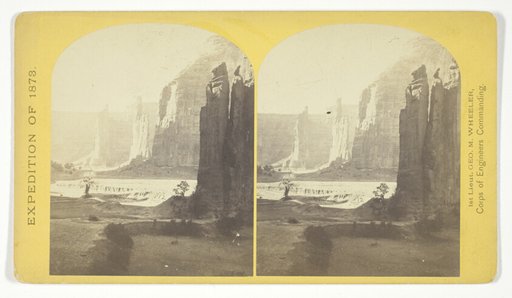 Central portion of Canñon de Chelle, New Mexico. This Canñon is one of the most remarkable in the west, and is noted for its beauty. The walls are of Red Sand-stone, nearly perpendicular, and at this point are 1.200 feet in height, No. 24 from the series "Geographical Explorations and Surveys West of the 100th Meridian"
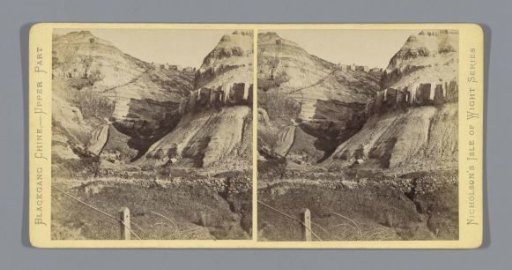 View of the ravine at Blackgang Chine
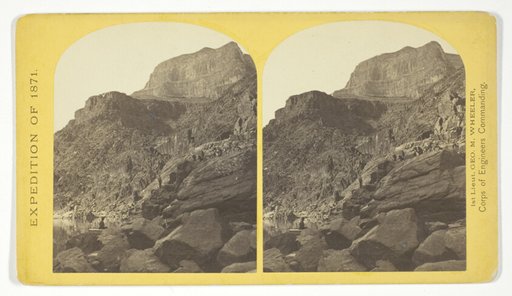 View of Grand Cañon walls, near mouth of Diamond River. From water line to first shelf 1.500 feet; from shelf to top of table 3.500 feet. Distance from point of view to top of walls 3 miles, No. 6 from the series "Geographical Explorations and Surveys West of the 100th Meridian"
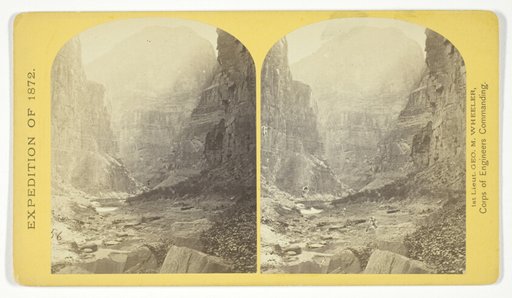 The mouth of Kanab Creek. The beds of the Colorado River and its tributary here lie in gorges cut by the running water to the depth of about 3.500 feet below the general surgace of the country. The highest point seen in the picture is 2.500 feet above the water, and the walls are here too steep to be scaled, No. 10 from the series "Geographical Explorations and Surveys West of the 100th Meridian"