CC0 · no rights reserved
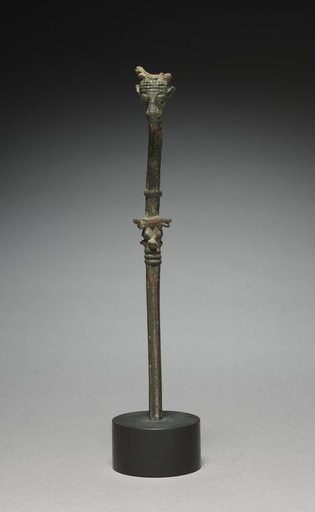
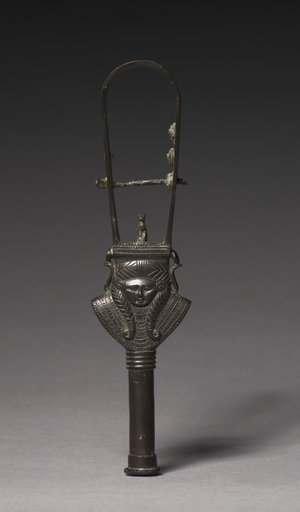
Arched Sistrum
From the collection of Cleveland Museum of Art. Free to download, adapt and use — no permission needed.
About this work
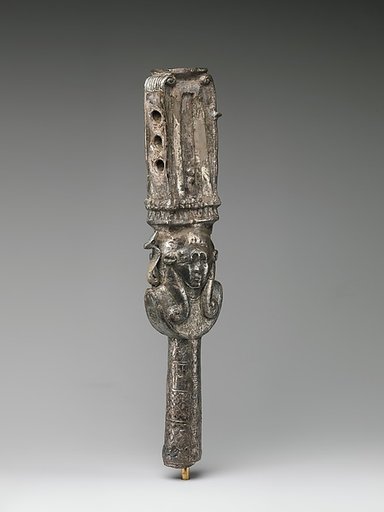
A sistrum is a musical rattle. Metal disks strung on wires along the arched upper end of the sistrum produced a rustling sound that was supposed to have a calming effect on the nerves of various deities, especially the goddesses Hathor and Bastet. Appropriately, this example is decorated with a Hathor head (a woman with cow’s ears) and a cat (the image of Bastet). These instruments are particularly associated with women, who played them as members of a temple choir.
Cleveland Museum of Art’s own descriptionCredit lineArched Sistrum, 380–343 BCE. Egypt, Late period (715–332 BCE), Dynasty 30. Bronze, hollow cast; overall: 21.4 x 5.3 cm (8 7/16 x 2 1/16 in.). The Cleveland Museum of Art, Gift of the John Huntington Art and Polytechnic Trust, 1920.1990