CC0 · no rights reserved
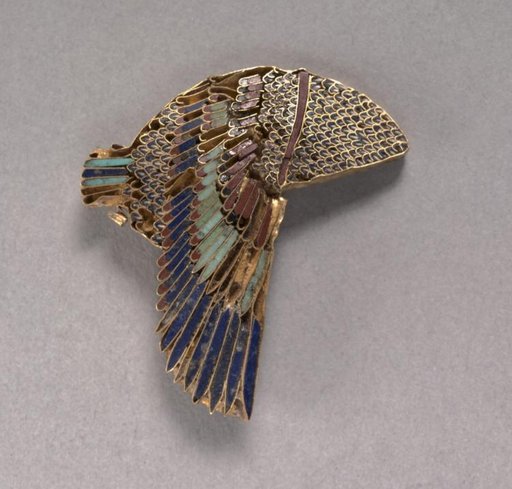
Vulture Headdress Inlay
From the collection of Cleveland Museum of Art. Free to download, adapt and use — no permission needed.
About this work
The vulture headdress was worn by goddesses and queens. This inlay in the form of a vulture headdress has more than 100 stones: lapis lazuli (dark blue), turquoise (light blue), petrified wood (red), and an unidentified white stone painstakingly cut to shape and separated by thin plates of gold. Body, wing, and tail feathers are carefully distinguished in minute detail.
Cleveland Museum of Art’s own descriptionCredit lineVulture Headdress Inlay, 100–1 BCE. Egypt, Greco-Roman period (332 BCE–395 CE), Ptolemaic dynasty (305–30 BCE). Gold and semi-precious stones; overall: 3 x 2.8 cm (1 3/16 x 1 1/8 in.). The Cleveland Museum of Art, Gift of the John Huntington Art and Polytechnic Trust, 1920.1991