CC0 · no rights reserved
Domestic Shrine
From the collection of Cleveland Museum of Art. Free to download, adapt and use — no permission needed.
About this work
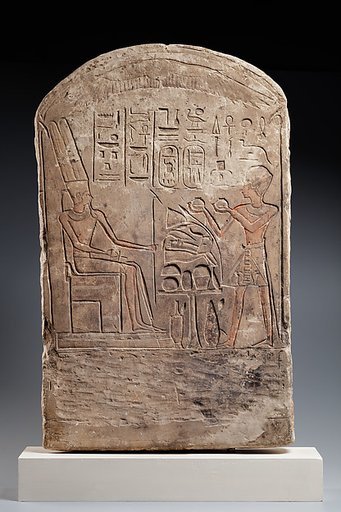
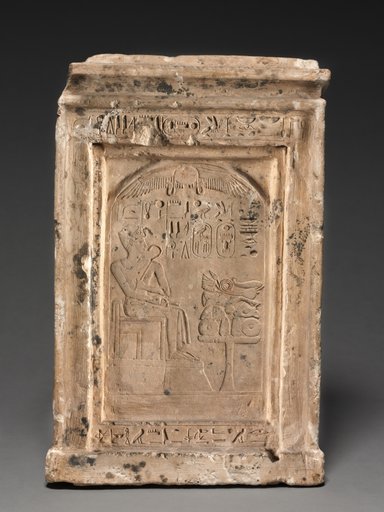
Used in the home like an icon, this shrine was originally provided with two wooden doors, hinged at each side and bolted in the center. The upper and lower sockets for the pivots of these doors still survive. The worshiper opened the doors to reveal the representation of King Tuthmosis III seated in front of an offering table. The hieroglyphic inscription at the base tells us that the shrine was made for the tomb worker Amenemheb. The carving is clearly in the style of Tuthmosis III’s reign, showing that such objects of private veneration were produced during the king‘s lifetime.
Cleveland Museum of Art’s own descriptionCredit lineDomestic Shrine, c. 1479–1425 BCE. Egypt, Thebes(?), New Kingdom (1540–1069 BCE), Dynasty 18, reign of Tuthmosis III (1479–1425 BCE). Limestone, originally painted; overall: 42.4 x 27.4 x 9 cm (16 11/16 x 10 13/16 x 3 9/16 in.). The Cleveland Museum of Art, Gift of the John Huntington Art and Polytechnic Trust, 1920.2002