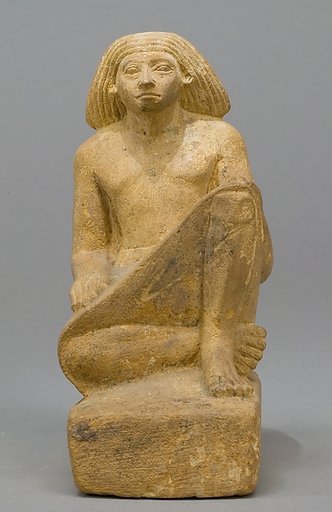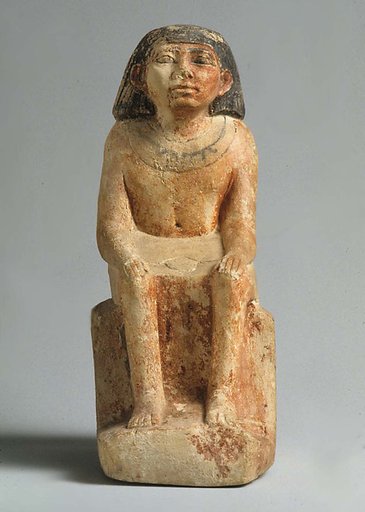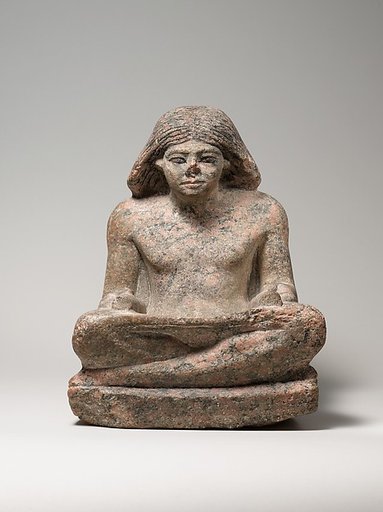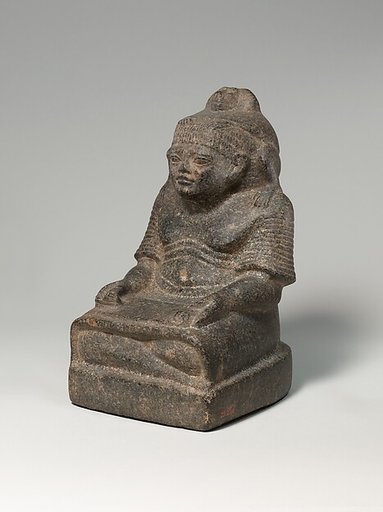
Seated Scribe of Medthu
From the collection of Cleveland Museum of Art. Free to download, adapt and use — no permission needed.
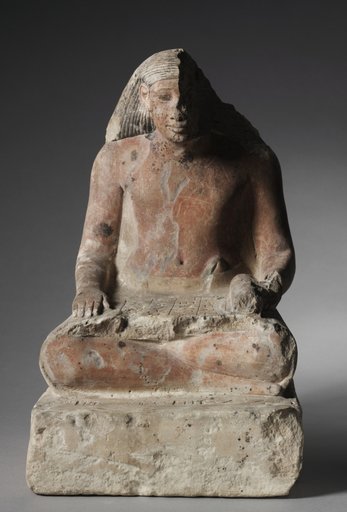
Medthu, the overseer of the two granaries and scribe of accounts of the fields of Amen, sits cross-legged on the ground in the traditional pose of a scribe. His striated, bell-shaped wig, the stripes of which run parallel to his forehead, completely reveals his ears and passes behind his shoulders. His short, belted kilt is stretched tight to support he papyrus that is partly unrolled across his lap. He holds the rolled-up portion with his left hand, and his right hand rests flat on the papyrus, which curls around his right thigh. The papyrus is inscribed in sunk relief with seven columns of hieroglyphs that face the scribe. The Middle Kingdom type of wig helps date the statue more closely to the earlier part of Dynasty 18, around the time of Tuthmosis III. Later in Dynasty 18 the coiffure was fashionably updated.
Cleveland Museum of Art’s own description