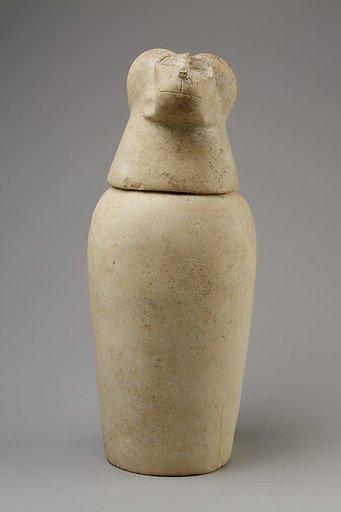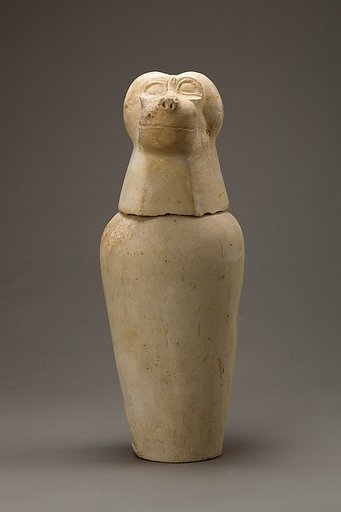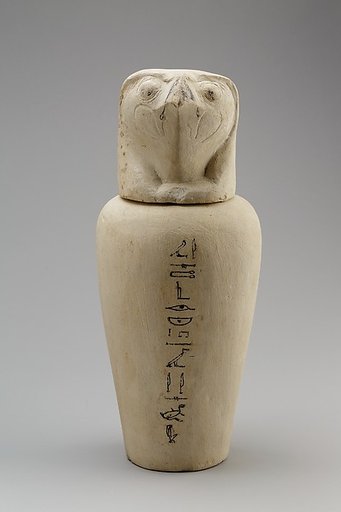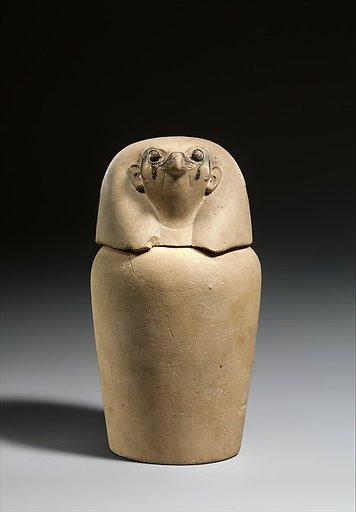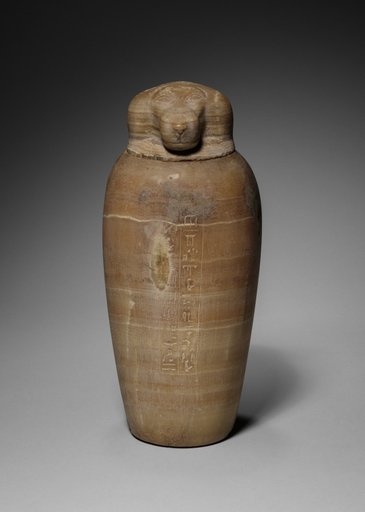
Canopic Jar with Baboon's Head
From the collection of Cleveland Museum of Art. Free to download, adapt and use — no permission needed.
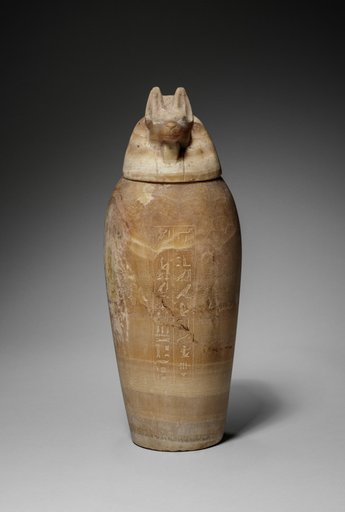
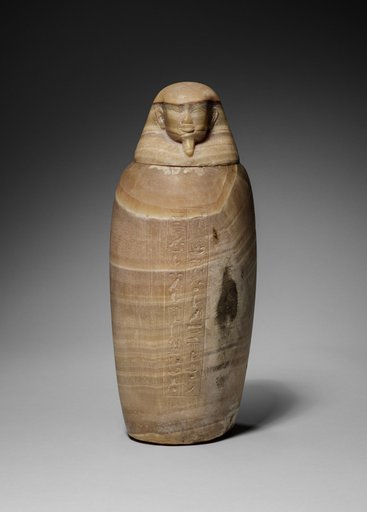
In the process of mummification, the liver, lungs, stomach, and intestines were removed, separately embalmed, and stored in specialized jars known as canopic jars (after a sailor in Greek mythology, who died at the town of Canopus in the Nile Delta and was worshipped there in the form of a human-headed jar). Each organ was identified with one of four funerary deities collectively known as the Sons of Horus: the liver with Imsety (man's head), the lungs with Hapy (baboon's head), the stomach with Duamutef (jackal's head), and the intestines with Qebehsenuef (falcon's head). It was their duty to protect the deceased and restore to him his body parts in the hereafter.
Cleveland Museum of Art’s own description