Diogenes
From the collection of Cleveland Museum of Art. Free to download, adapt and use — no permission needed.
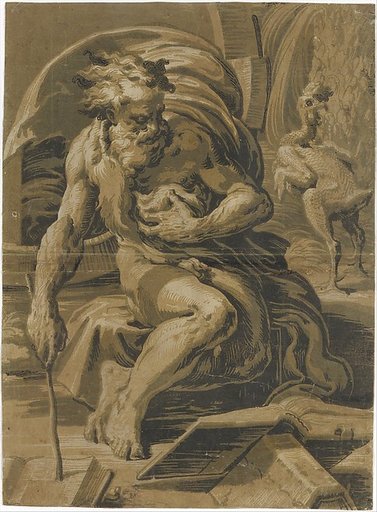
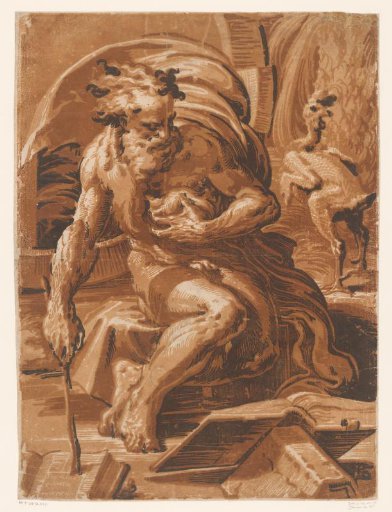
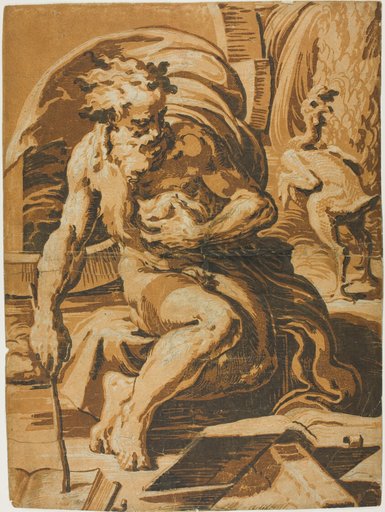
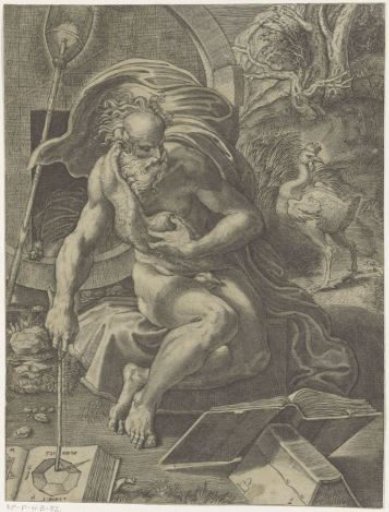
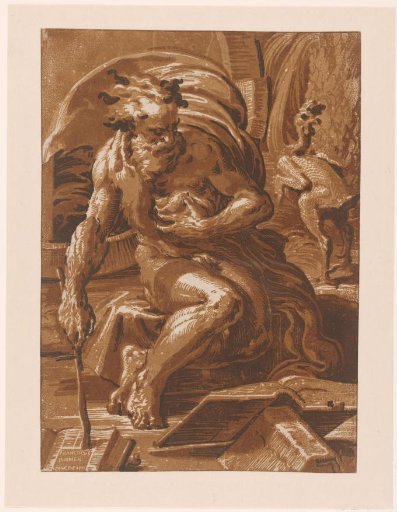
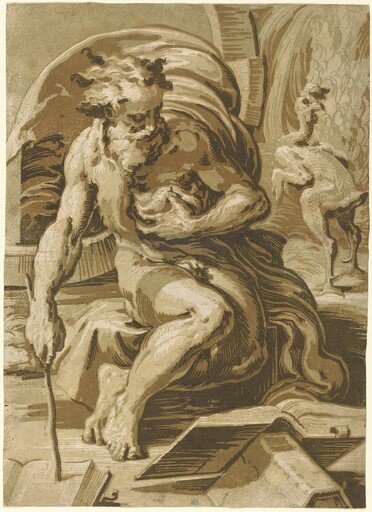
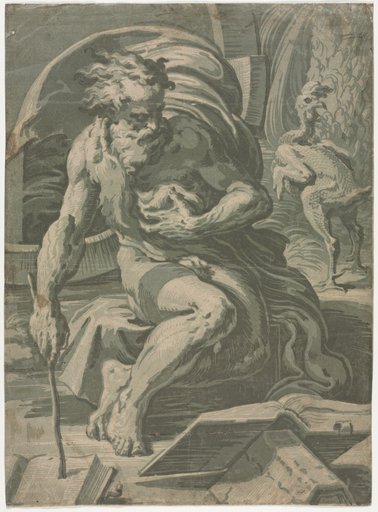
Diogenes was a Greek philosopher who lived during the 300s BC. The bird in the background alludes to his cynical response to Plato, who had described man as a featherless biped. Diogenes plucked a rooster and brought it to Plato’s school, exclaiming, “Here is Plato’s man!” Ugo da Carpi was influential in the development of the chiaroscuro woodcut in Italy. The term chiaroscuro combines the Italian words chiaro (light) and scuro (dark). Invented to emulate drawings with light and dark pigments on tinted paper, the printing technique uses multiple woodblocks to layer different tones of color. This example, considered a masterpiece of Renaissance printmaking, uses four shades of green to render tonal values; the paper provides the lightest color in the composition.
Cleveland Museum of Art’s own description