CC0 · no rights reserved
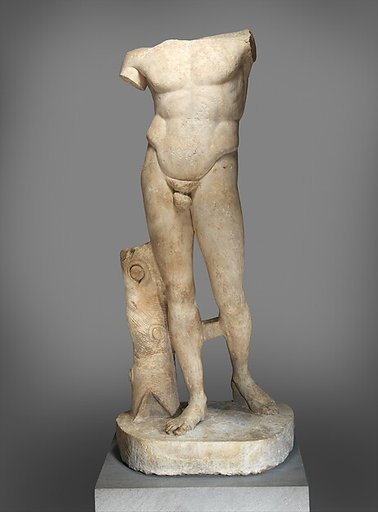
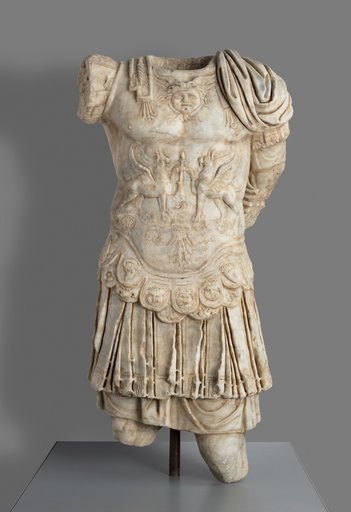
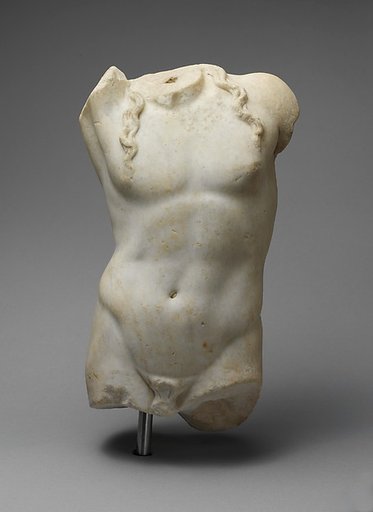
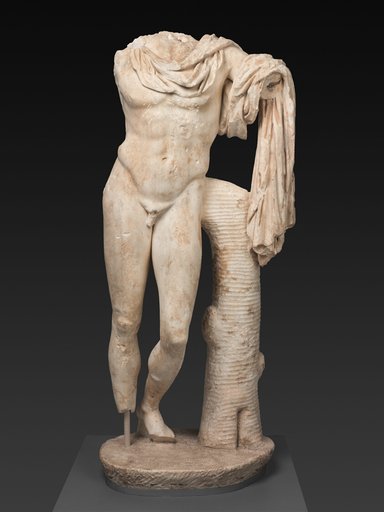
Torso of Apollo
From the collection of Cleveland Museum of Art. Free to download, adapt and use — no permission needed.
About this work
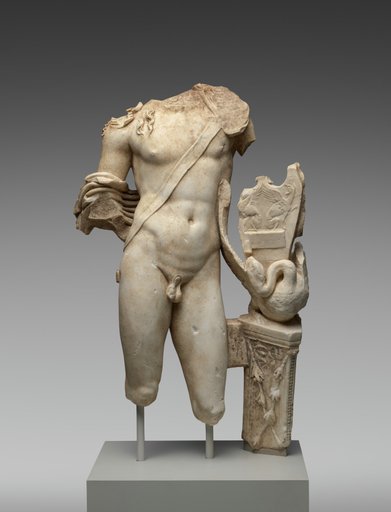
This ancient statue depicts the Greek god Apollo, identified by his youthful body and the fragmentary remains of his kithara, a type of lyre (or stringed instrument) used by poets and musicians in ancient Greece. Both the kithara, decorated with griffins, and the swan upon which it rests (atop a triangular column), signify Apollo’s roles as the god of music and leader of the Muses. Beloved by the Muses for their song, swans were considered sacred to Apollo because he gave them the gift of prophecy. Swans sing a glorious song before they die, knowing they will soon return to Apollo to be reborn.
Cleveland Museum of Art’s own descriptionCredit lineTorso of Apollo, c. 100–200 CE. Italy, Roman. Marble; overall: 90 cm (35 7/16 in.). The Cleveland Museum of Art, Gift of J. H. Wade, 1924.1017