Qur'an Manuscript Folio
From the collection of Cleveland Museum of Art. Free to download, adapt and use — no permission needed.
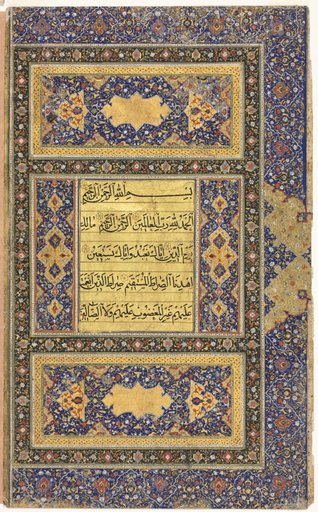
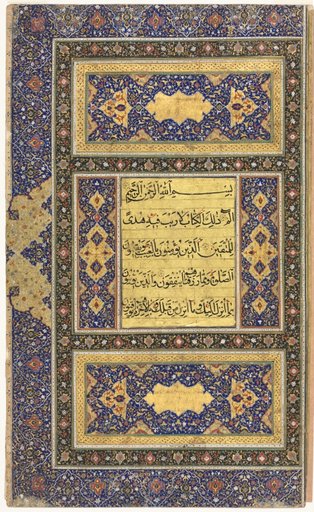
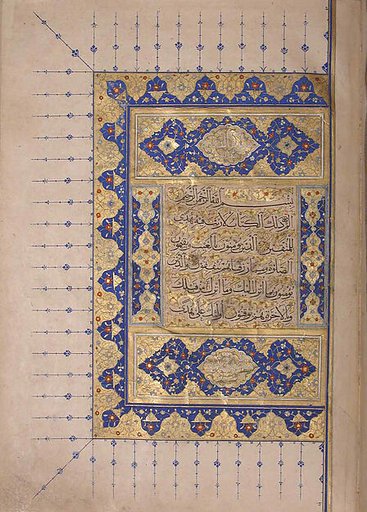
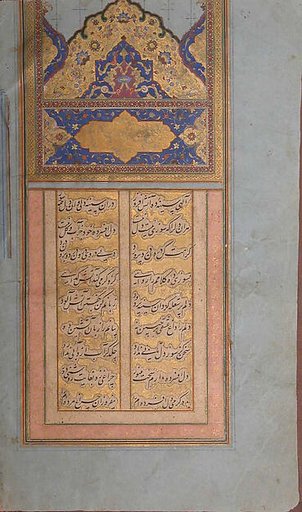
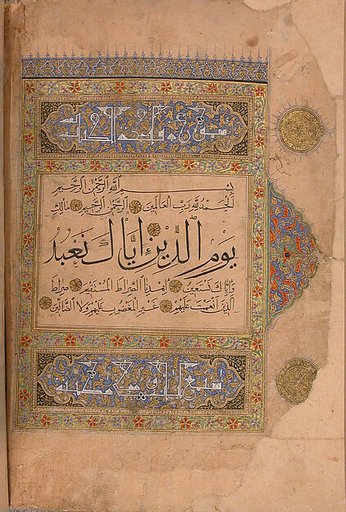
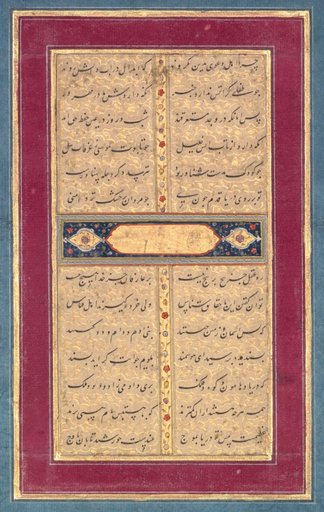
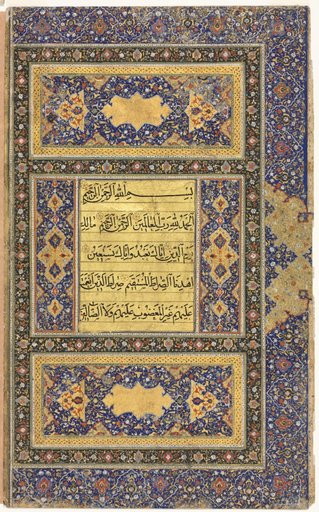
Calligraphy, the art of beautiful writing, was elevated above all other art forms in the Islamic world because Allah (God), revealed the divine word of Islam to the Prophet Muhammad (570–632) in the Arabic language. This beautiful double page forms the opening pages, or unwan , of a Qur’an, the sacred book of Islam. Read from right to left, the verses are written in Arabic in elegant naskhi script on a gold ground with florets identifying the ends of the verses. Calligraphers who specialized in beautiful writing often dedicated their lives to copying the Qur’an to grow closer to Allah and receive his blessings. The pages are enhanced with splendid illumination—ornamentation in colors and gold with scrolling vines, blossoms, lozenges, and cartouches within bordered rectangles. Because the book arts were held in high esteem in the Islamic world, decorative motifs created by illuminators were often adopted in other art forms such as metalwork, textiles, and carpets.
Cleveland Museum of Art’s own description