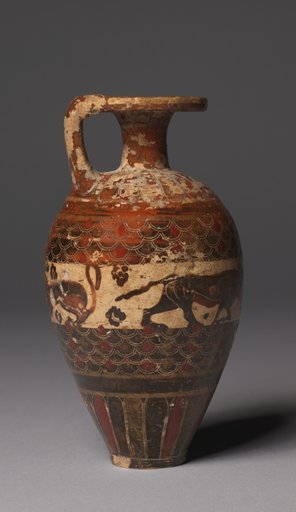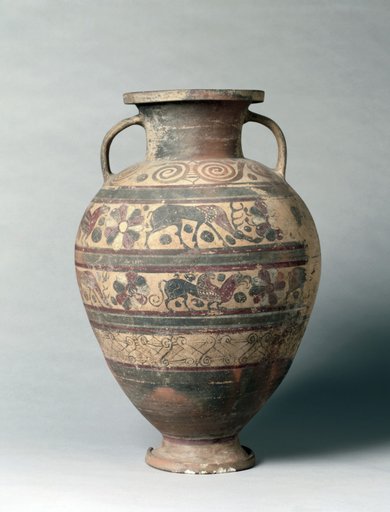
Black-Figure Neck-Amphora (Storage Vessel): Animal Friezes
From the collection of Cleveland Museum of Art. Free to download, adapt and use — no permission needed.
Although seemingly simple in design, this amphora populated with animals (some mythological) and vegetal ornaments speaks to complex cultural intermingling in the ancient world. Known as “Etrusco-Corinthian,” the vase was made in Vulci, an Etruscan site with local workshops influenced by the Greek pottery imported there. These imports, especially from the ancient city of Corinth, helped to bring certain motifs and creatures borrowed from the Near East—such as the griffins here—to the Italian peninsula. Among several lively Etruscan elements on this vase are flowering rosettes, including one about to be eaten by a stag foraging in the upper band.
Cleveland Museum of Art’s own description