CC0 · no rights reserved
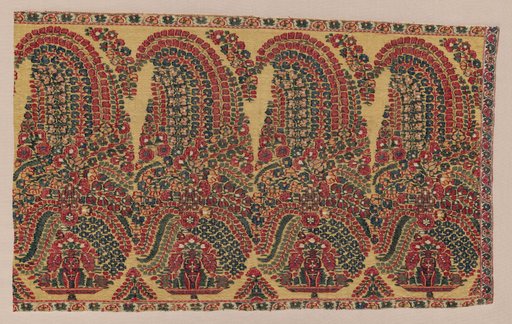
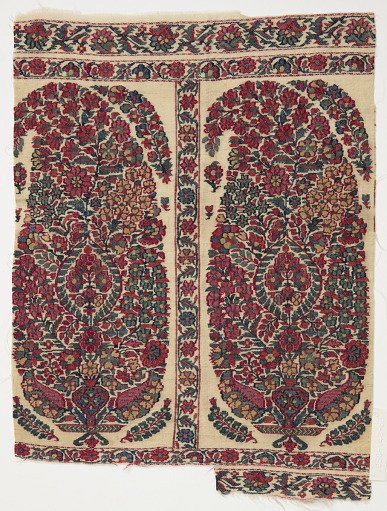
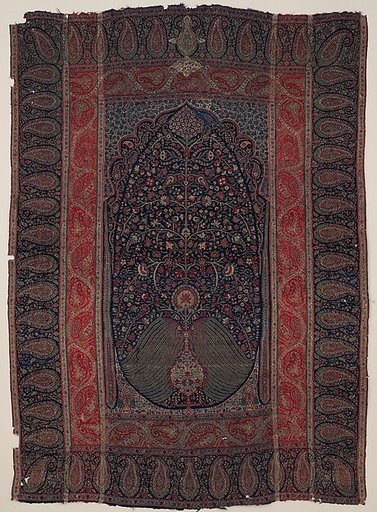
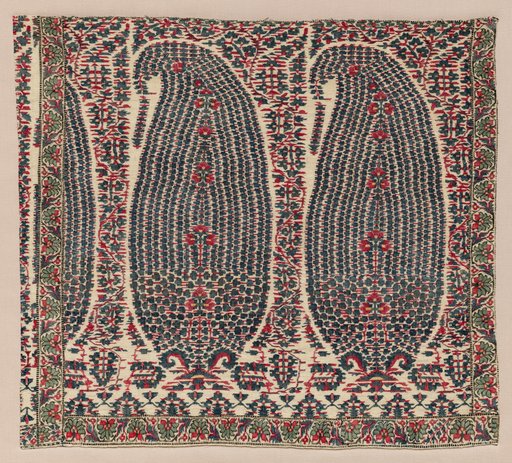
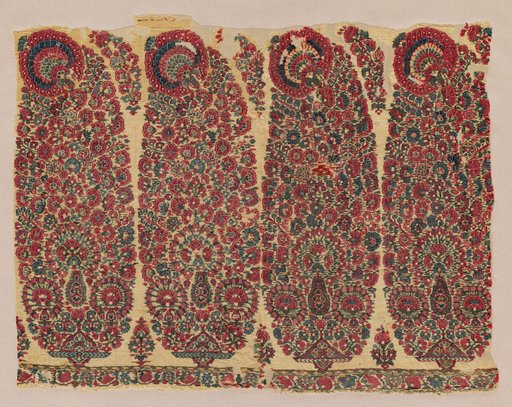
Border of a Shawl
From the collection of Cleveland Museum of Art. Free to download, adapt and use — no permission needed.
About this work
Kashmiri shawls were extremely popular in the early 1800s, especially among foreigners to the Indian subcontinent. Made in the mountainous region of northwest India from wool from mountain goats from nearby Ladakh, the fabrics were especially prized for their softness and their beautiful symmetrical designs, often called paisley in English. This textile fragment was once owned by Ananda Coomaraswamy (1877–1947), a Ceylonese (Sri Lankan) art historian and collector who is credited with introducing South Asian art to museums in the United States.
Cleveland Museum of Art’s own descriptionCredit lineBorder of a Shawl, c. 1825–30. India, Kashmir. Wool: tapestry twill; overall: 37.1 x 48.9 cm (14 5/8 x 19 1/4 in.); mounted: 54.9 x 66.7 cm (21 5/8 x 26 1/4 in.). The Cleveland Museum of Art, Purchase from the J. H. Wade Fund, 1925.500