CC0 · no rights reserved
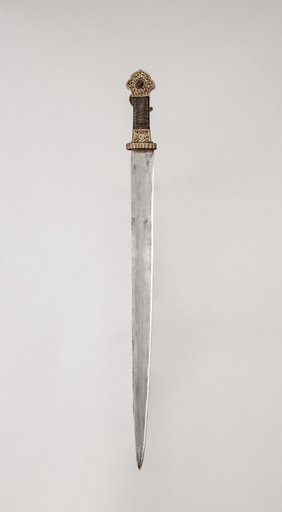
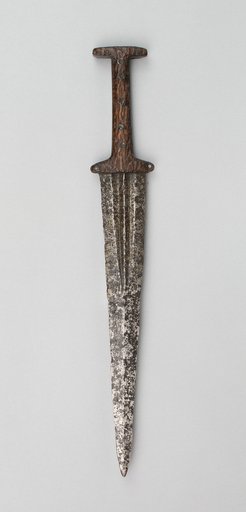
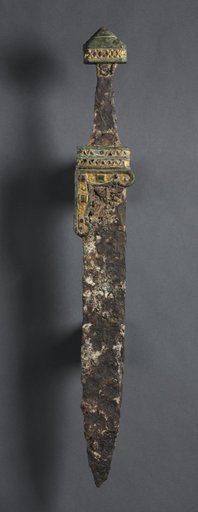
Single-Edged Knife (Scramasax)
From the collection of Cleveland Museum of Art. Free to download, adapt and use — no permission needed.
About this work
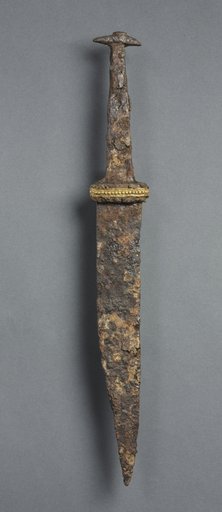
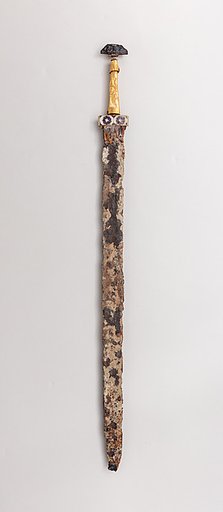
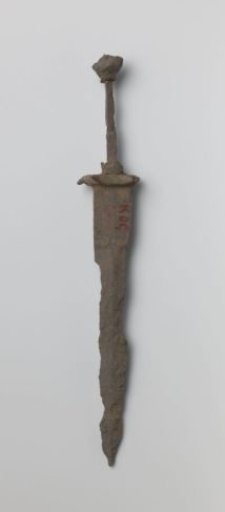
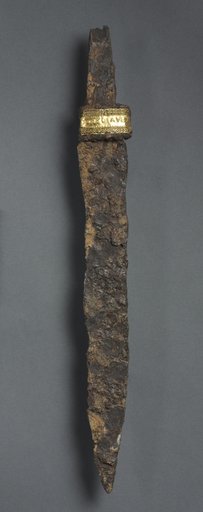
The scramasax, a single-edged knife, was a general purpose implement. It could serve equally well as a tool or as a weapon and usually did not exceed 12 inches in length. As with most objects of the Migration period, iron weapons survive as excavated grave goods and tend to be heavily corroded. The grips, now missing, were probably fashioned from wood or bone and silver inlay decorated the pommels (the knob on the hilt, or handle). The ornamental gold foil bands, perhaps from the original scabbards (the cases in which the blades of swords or daggers are kept) have survived relatively intact.
Cleveland Museum of Art’s own descriptionCredit lineSingle-Edged Knife (Scramasax), c. 500–700. Merovingian, Migration period, 6th-7th Century. Iron, brass, gold foil, gold wire, gemstones; overall: 54.3 x 6.4 cm (21 3/8 x 2 1/2 in.). The Cleveland Museum of Art, Purchase from the J. H. Wade Fund, 1926.429