The Griffin
From the collection of Cleveland Museum of Art. Free to download, adapt and use — no permission needed.
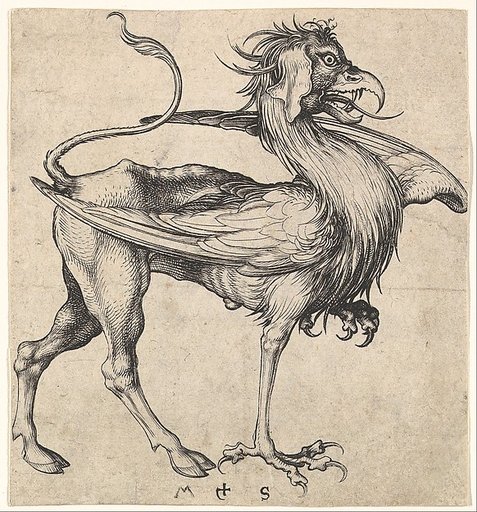
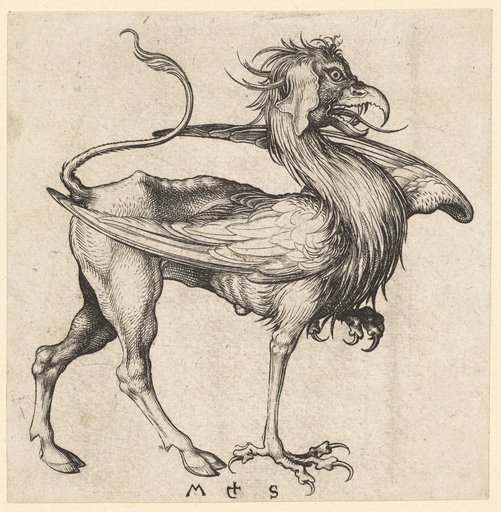
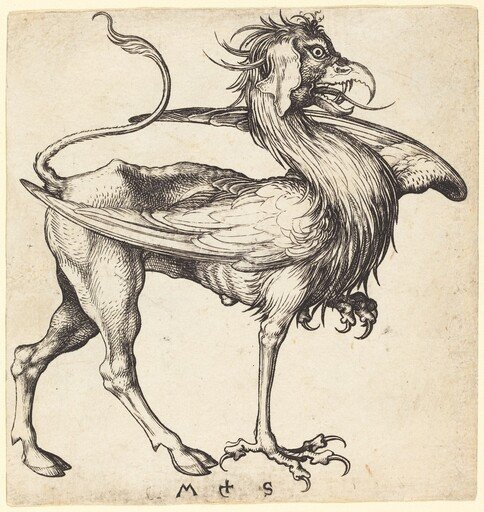
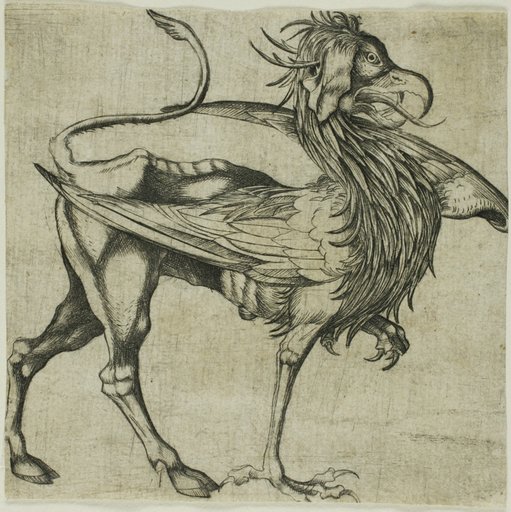
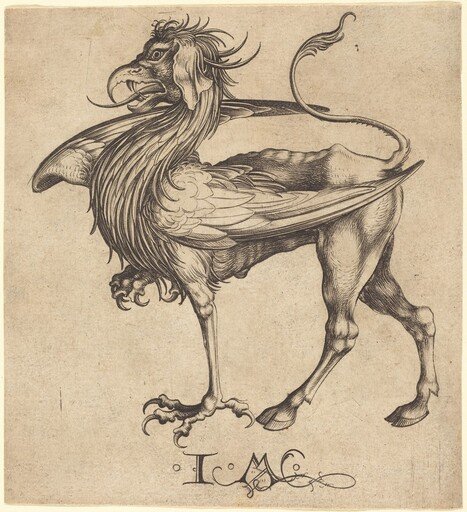
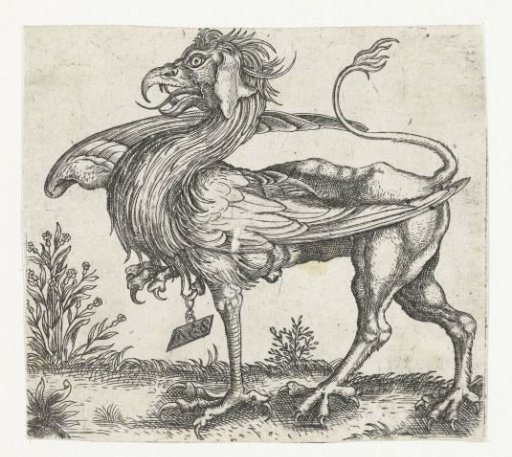
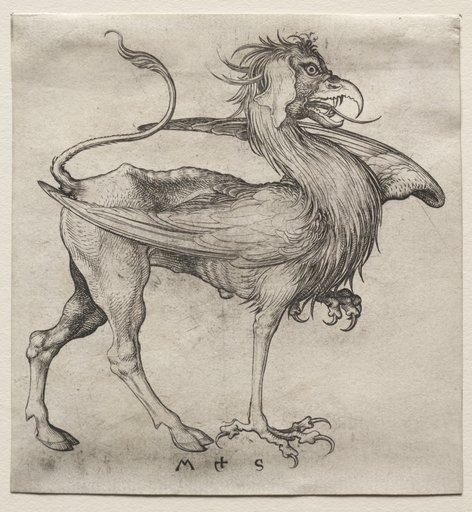
According to medieval bestiaries (books of beasts), the griffin is an imaginary and immensely dangerous creature, believed to carry off humans and oxen. Usually depicted with the body of a lion and the head, wings, and claws of an eagle, the griffin symbolizes both courage and vigilance. Its dual nature also signifies that of Christ himself: divine (bird) and human (animal). Martin Schongauer's griffin is an unusual combination of an eagle and an ox—see the back hoofed paws—departing from the traditional representation of this animal as part eagle and part lion. With a few bold strokes of the burin, Schongauer rendered in a naturalistic way the shape and texture of the feathers and fur of this fabled beast.
Cleveland Museum of Art’s own description