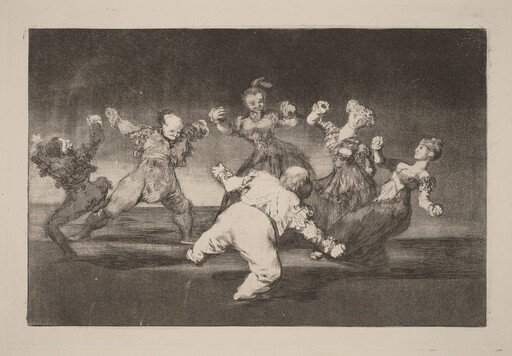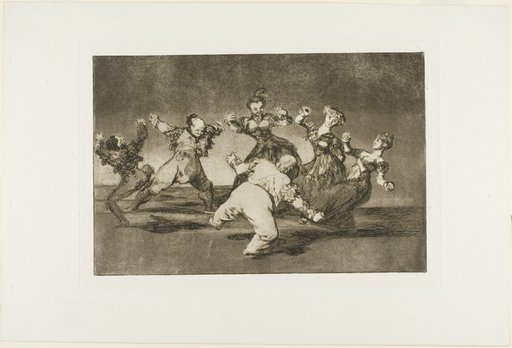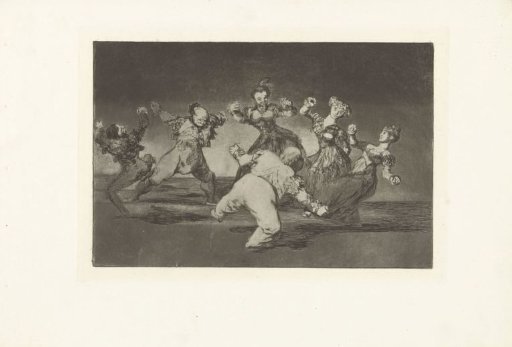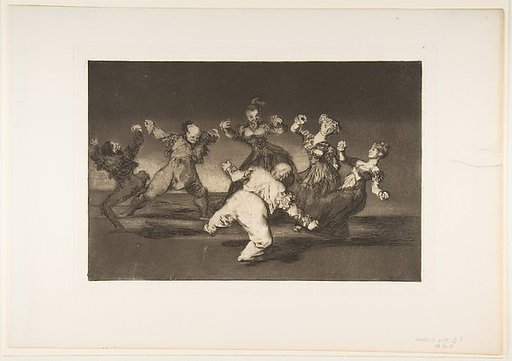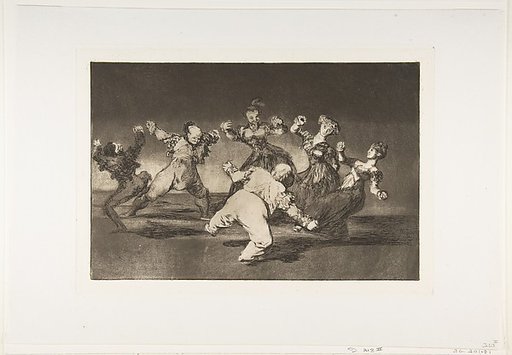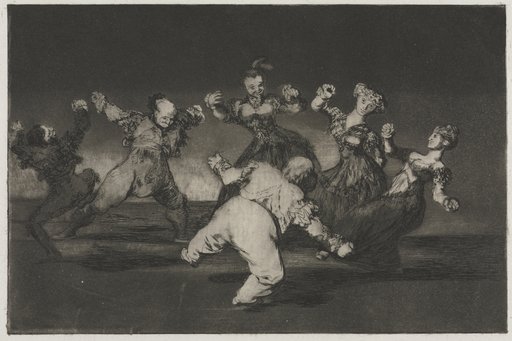
The Proverbs: If Marion Will Dance, Then She Has to Take the Consequences
From the collection of Cleveland Museum of Art. Free to download, adapt and use — no permission needed.
The freewheeling, lascivious dancers in Goya’s composion keep time with castanets, pairs of shell-shaped wooden clappers attached to the thumb and index finger. The erotic connotations of castanets dated from antiquity, when they were depicted in vase paintings in association with the cult of the goddess Cybele and the Dionysian rites. According to Martin Mersenne’s treatise, Les Preludes de l’harmonie universelle (1636), castanets were used to accompany the saraband, a fast folk dance considered disreputable in 16th-century Spain. Although by the time the saraband reached the French court in the 17th century, it had become a slow, serious, processional dance, Goya refers here to the dance’s earlier, erotic origins.
Cleveland Museum of Art’s own description