CC0 · no rights reserved
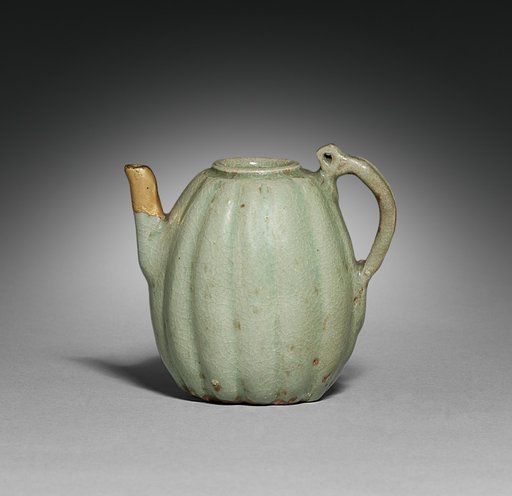
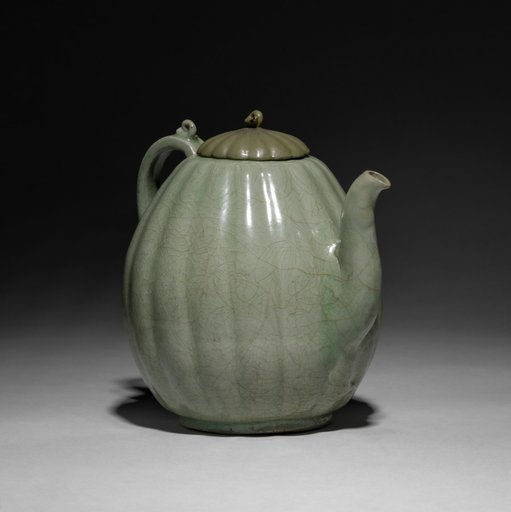
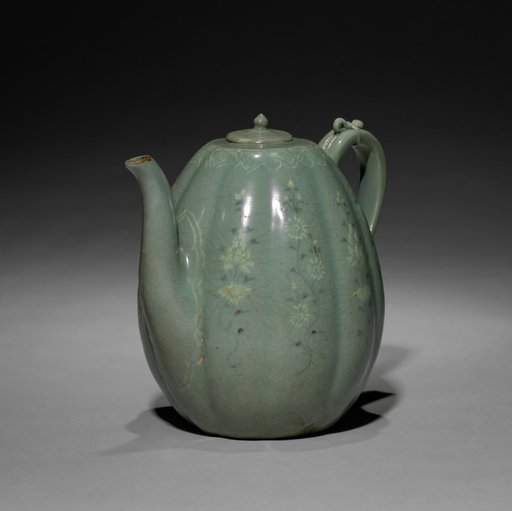
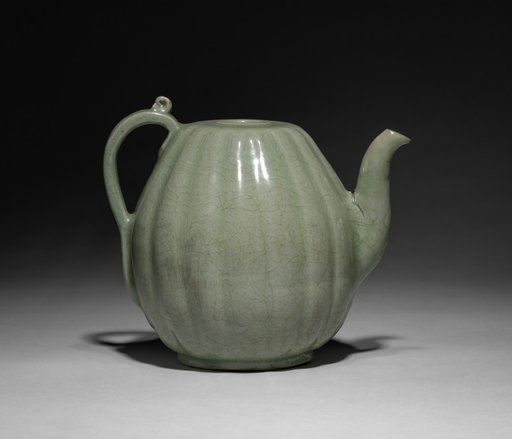
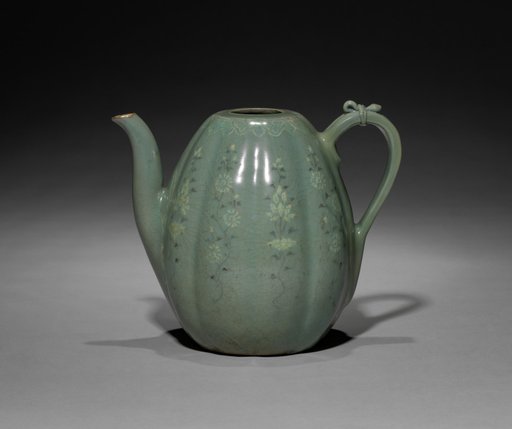
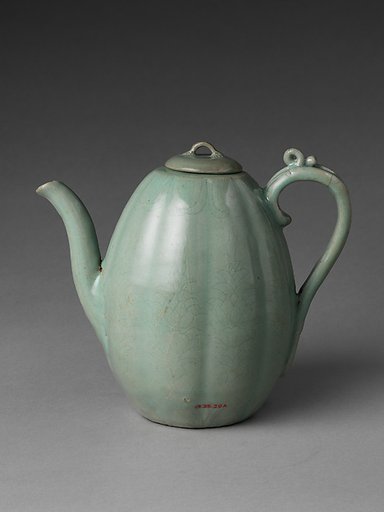
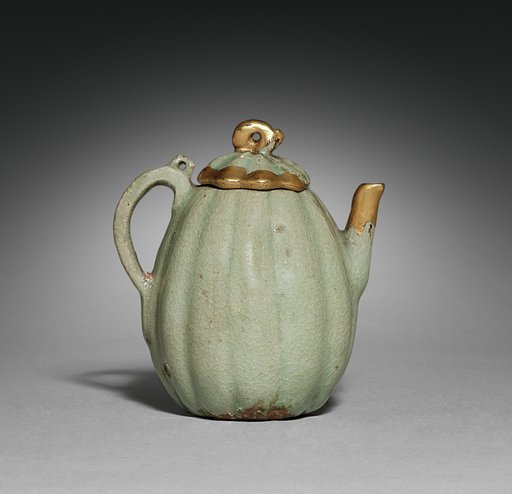
Melon-shaped Wine Ewer
From the collection of Cleveland Museum of Art. Free to download, adapt and use — no permission needed.
About this work
Many celadon ceramics, such as these two miniature pots, have been repaired with gold lacquer. Termed kintsugi (literally meaning “gold joinery”) in Japanese, this restoration method highlights broken parts with glittering gold mixed with lacquer. Initiated in Japan in the 1400s, the technique follows a popular aesthetic concept called wabi-sabi, which finds beauty in imperfect things. Goryeo celadons were considered rare treasures among Japanese collectors in the early 1900s; thus, their broken condition is brilliantly highlighted in gold lacquer, as seen here in the repaired spouts, handle, and lid.
Cleveland Museum of Art’s own descriptionCredit lineMelon-shaped Wine Ewer (청자 참외모양 주전자 [靑磁瓜形注子]), 1100s–1200s. Korea, Goryeo dynasty (918–1392). Celadon; outer diameter: 6.7 cm (2 5/8 in.); height with lid: 9 cm (3 9/16 in.). The Cleveland Museum of Art, Gift of John L. Severance, 1928.173