CC0 · no rights reserved
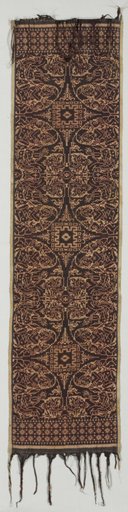
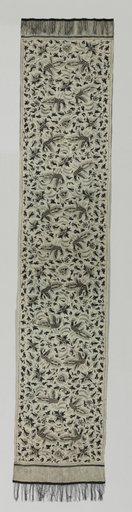
Slendang (Shoulder Cloth)
From the collection of Cleveland Museum of Art. Free to download, adapt and use — no permission needed.
About this work
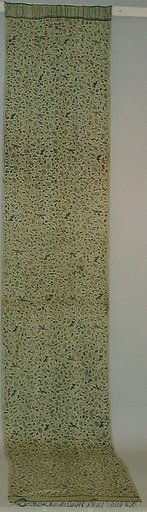
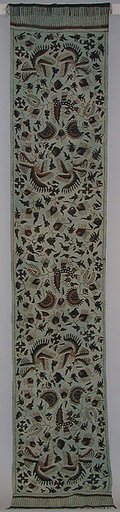
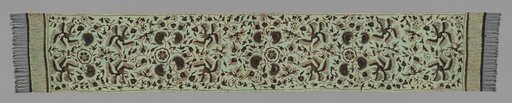
Chinese people living in the coastal cities of northern Java made and traded silk batiks like this one. The silk was imported from China, and the motifs were always Chinese. The "luk wan" bird, a variation of the Chinese phoenix that occurs on this shoulder cloth, was one of the most common motifs on silk batiks, as is the greenish color of the background. The striped border was meant to simulate fringe even though each end is actually finished with fringe. Silk batiks were made for export, particularly to Bali where they were worn at festivals by wealthy people.
Cleveland Museum of Art’s own descriptionCredit lineSlendang (Shoulder Cloth), 1800s-early 1900s. Indonesia, Java, North Coast, 19th - early 20th century. Tabby weave, batik; silk; overall: 284.4 x 55.9 cm (111 15/16 x 22 in.). The Cleveland Museum of Art, Sundry Purchase Fund, 1929.136