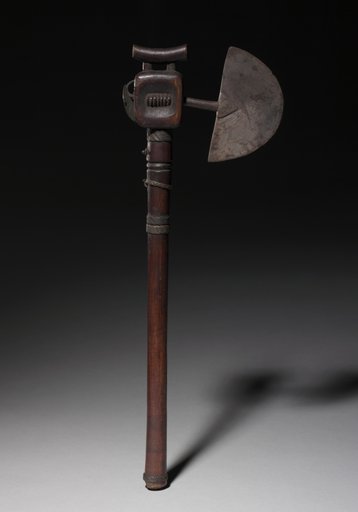
Ceremonial Axe (gano)
From the collection of Cleveland Museum of Art. Free to download, adapt and use — no permission needed.
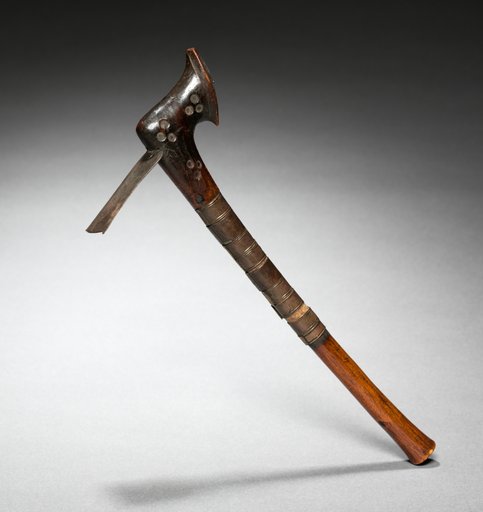
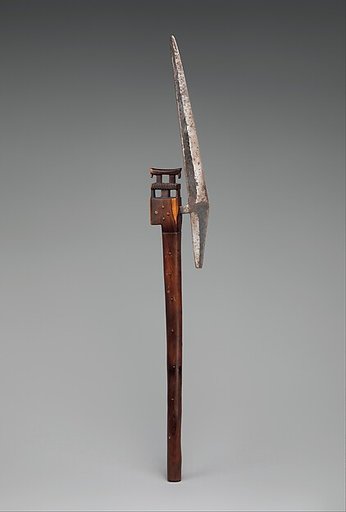
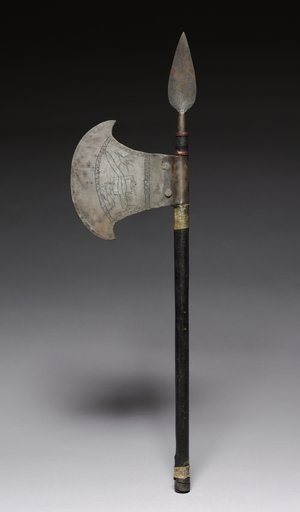
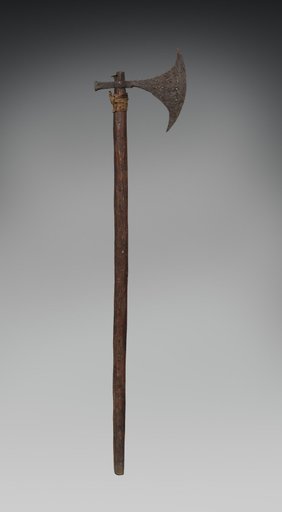
This ceremonial axe ( gano ) showcases its maker’s skill in using different materials. The crescent-shaped blade was likely locally forged; braided wires and a Swiss pocket watch fragment on the handle were imported. Like the headrest nearby, gano were gendered female; a small headrest is carved at top. Too fine for battle, a man may have held it as a status or ancestral symbol during rituals or dancing. Though made for centuries, religious use of knives and axes waned due to early 20th-century Christianity and government laws. Rising independence-era Zimbabwean nationalism (1960s–70s) revived tradition-based religion and associated objects like the gano.
Cleveland Museum of Art’s own description