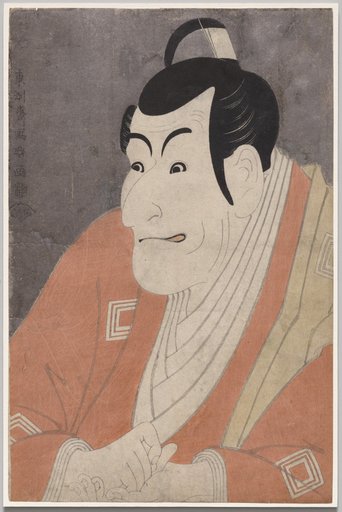
Ichikawa Ebizō IV (Danjurō) as Takemura Sadanoshin in The Loving Wife's Parti-Colored Reins
From the collection of Cleveland Museum of Art. Free to download, adapt and use — no permission needed.
Ichikawa Ebizō IV’s (1741–1806) character, an actor called Takemura Sadanoshin, is permitted to perform opposite his daughter so he can see and hear her for the last time before her banishment for a forbidden love affair. This design belongs to a category of Japanese prints called “actor images” ( yakusha - e or 役者絵). They were collected by fans of popular Kabuki actors. Kabuki is a kind of entertainment that got its start in the early Edo period, evolving from dance performances with simple storylines to long plays with complex plots, elaborate sets, and full musical accompaniments. Performers wear showy costumes and heavy makeup and strike poses called mie at critical moments in the narrative. Dialogue is spoken in a stylized way that resembles singing.
Cleveland Museum of Art’s own descriptionSimilar works
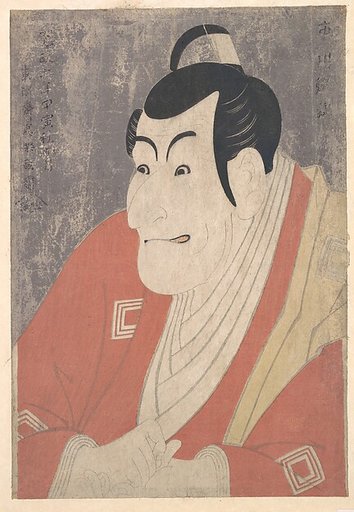 Ichikawa Ebizō IV as Takemura Sadanojō in the Play Koinyōbō Somewake Tazuna
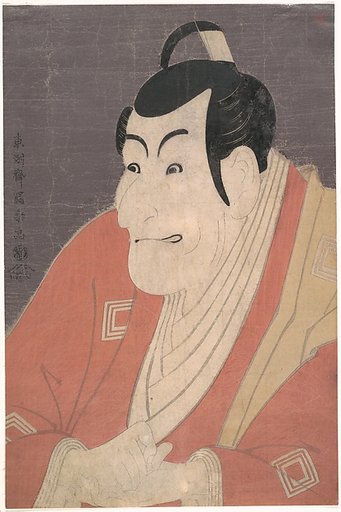 Kabuki Actor Ichikawa Ebizō (Ichikawa Danjūrō V) in the play The Colored Reins of a Loving Wife (Koi nyōbō somewake tazuna)
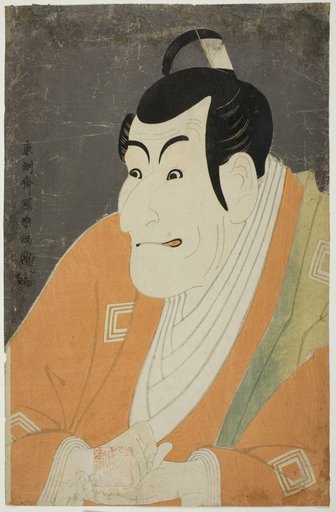 The actor Ichikawa Ebizo IV as Takemura Sadanoshin
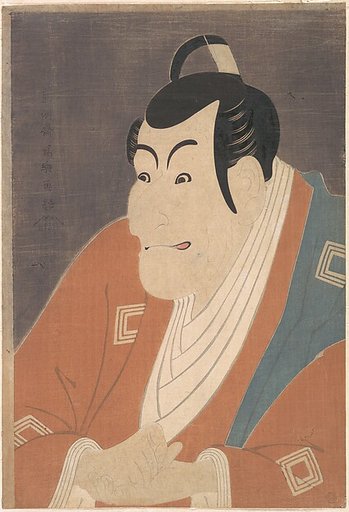 Ichikawa Ebizo IV in the role of Takemura Sadanoshin
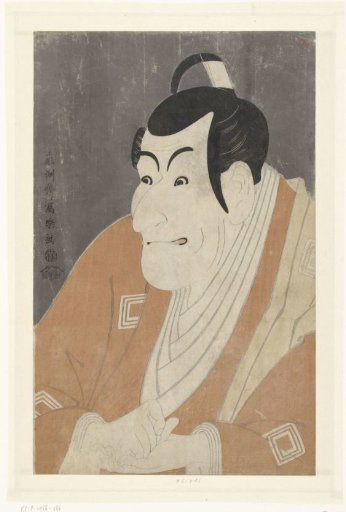 Bust portrait of Ichikawa Ebizo IV
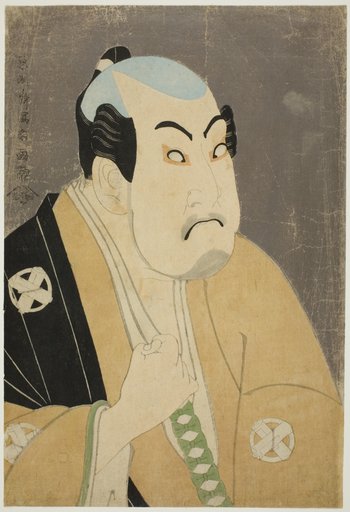 The actor Tanimura Torazo as Washizuka Hachiheiji