CC0 · no rights reserved
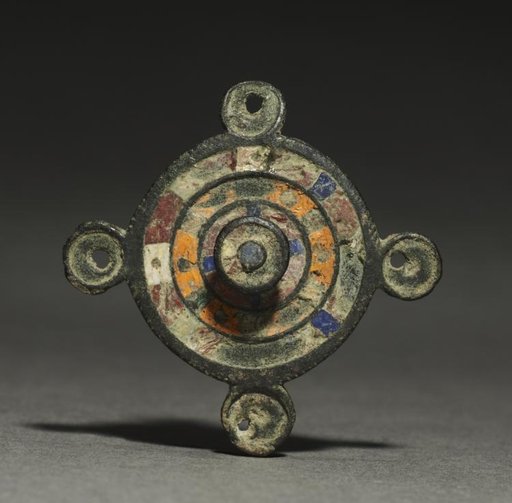
Ornamental Brooch
From the collection of Cleveland Museum of Art. Free to download, adapt and use — no permission needed.
About this work
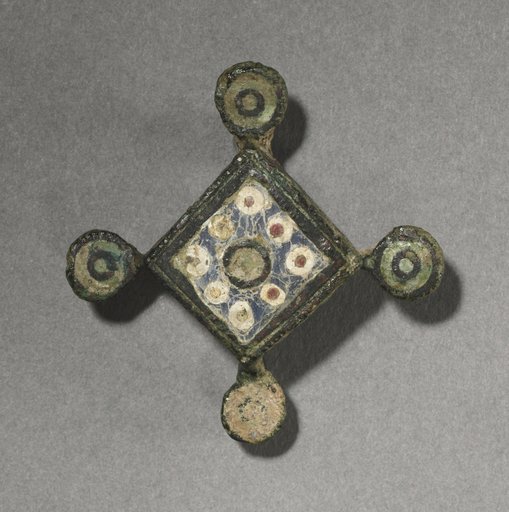
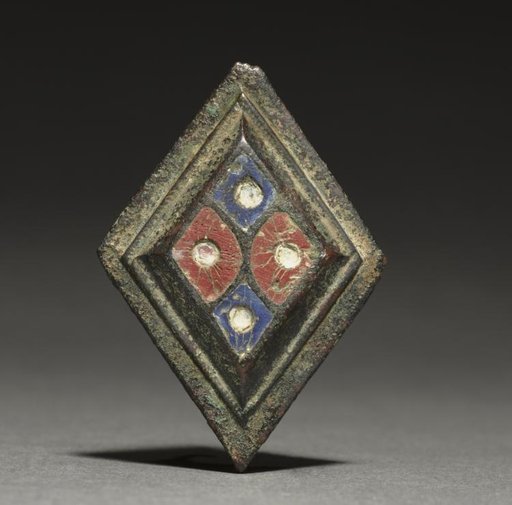
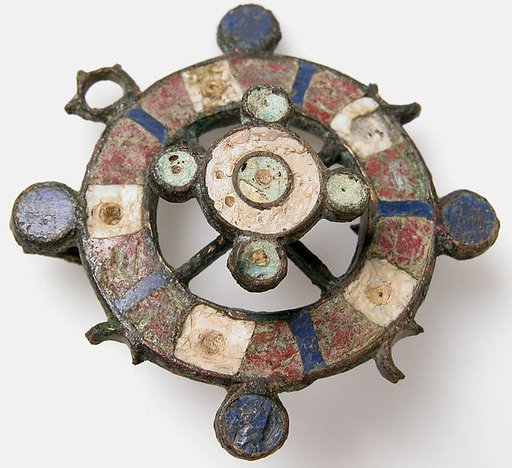
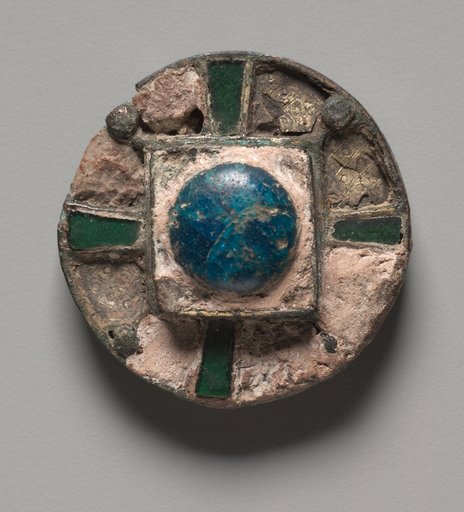
These brooches functioned as garment clasps (much like the generally larger fibulae) and are distinctive for their decorative enamels. The art of enameling was highly popular among the conquered peoples who lived on the outskirts of the Roman empire, chiefly the Celts and the Gauls. Though the enameling technique was practiced by the Romans themselves on small objects, the brightly colored decoration readily appealed to "barbarian" taste. By the AD 200s, enameled brooches like these were being made in abundance by the native peoples of Britain and Gaul (modern France and Belgium).
Cleveland Museum of Art’s own descriptionCredit lineOrnamental Brooch, c. 100–300 CE. Gallo-Roman or Romano-British, Migration period. Bronze and champlevé enamel; overall: 5.3 x 5.3 x 1.6 cm (2 1/16 x 2 1/16 x 5/8 in.). The Cleveland Museum of Art, Purchase from the J. H. Wade Fund, 1930.230