CC0 · no rights reserved
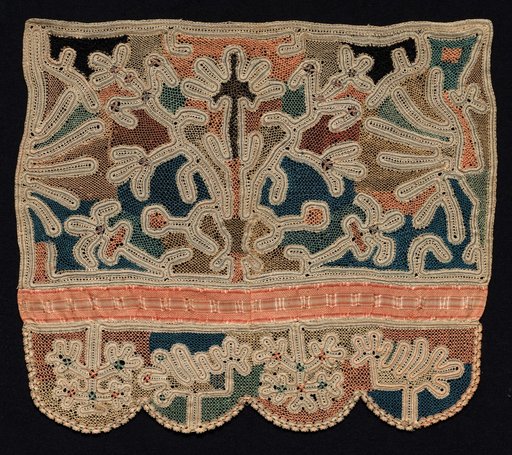
Lace Towel End
From the collection of Cleveland Museum of Art. Free to download, adapt and use — no permission needed.
About this work
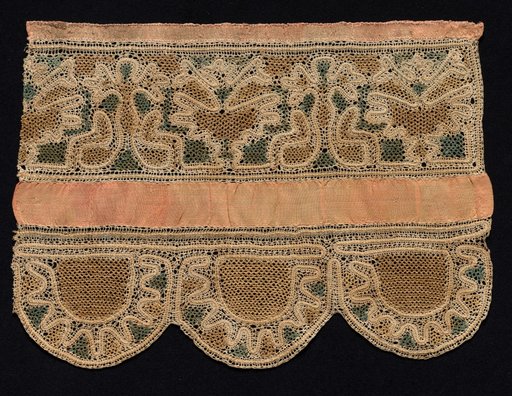
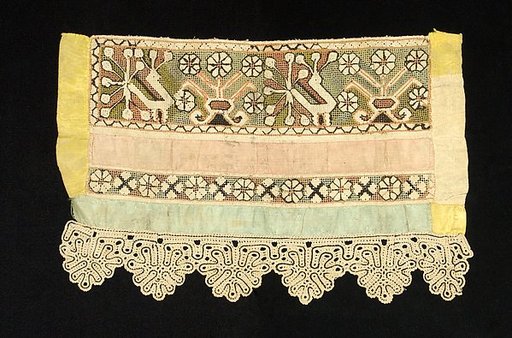
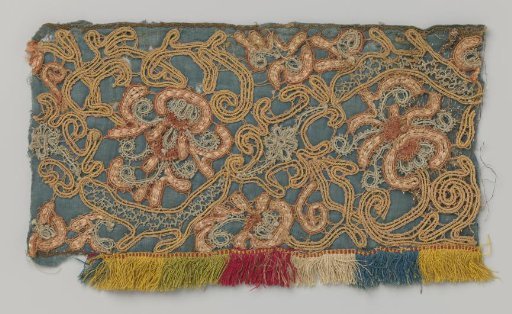
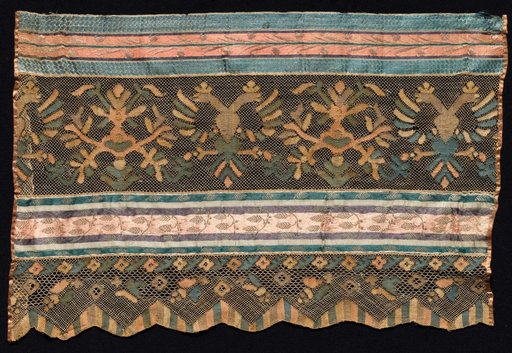
This Russian lace panel was likely used to embellish the end of a bathing towel. Textiles of this type are valuable for their fine lace making including ancient folk motifs, ritual significance, exemplification of the role of textiles in their society, and in this case, connection to a prominent woman collector, Natalia de Shabelsky, without whom this textile and others like it might have been lost.
Cleveland Museum of Art’s own descriptionCredit lineLace Towel End, c. 1700s–1800s. Russia, Kostroma province. Cotton or linen (est.); straight (continuous) bobbin lace (Vologda tape lace). The tape forms figural or plant motifs outlined with colored gimp (heavy cord) with a polychrome plaited ground linking the tape; applied silk (est.) ribbon; overall: 33 x 38.1 cm (13 x 15 in.). The Cleveland Museum of Art, Purchase from the J. H. Wade Fund, 1931.108