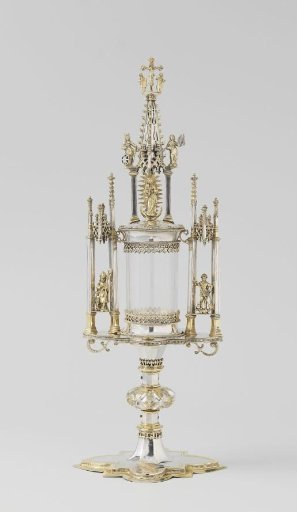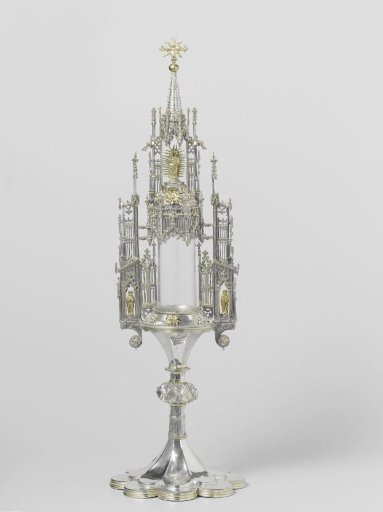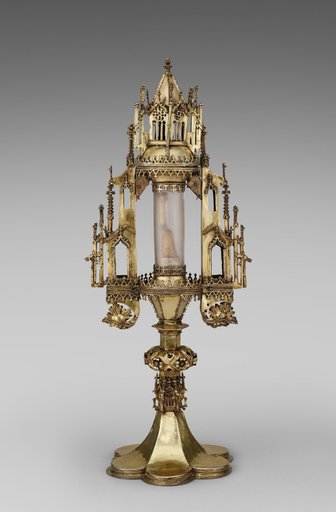
Monstrance with a Relic of Saint Sebastian
From the collection of Cleveland Museum of Art. Free to download, adapt and use — no permission needed.
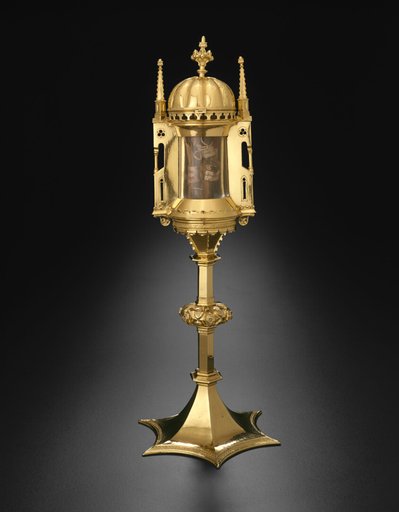
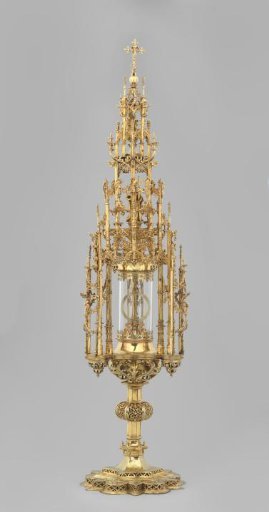
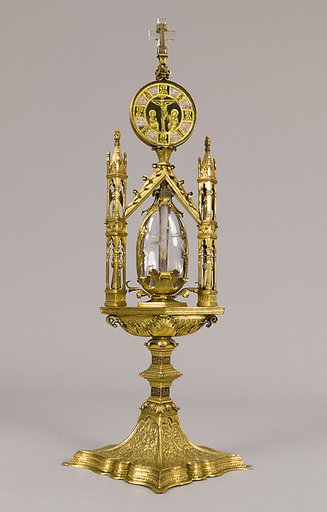
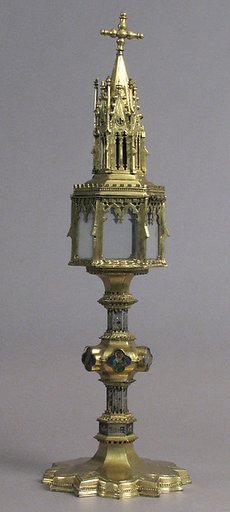
This Late Gothic monstrance (from the Latin monstrare, "to show") is mentioned in the earliest inventory of Saint Blaise as "a large new monstrance containing relics of Saint Sebastian the martyr." Judging from surviving receipts, the reliquary was made by Werner Korff, a local goldsmith, who received payments for silver and gilding at the end of 1484. The reliquary was first displayed on the altar of the church of Saint Blaise in a solemn penitential mass on June 4, 1484, in an effort to ward off the plague. A recent examination revealed that the relic is a human metatarsal bone (one of five long bones of the human foot) and that its owner seemed to have suffered from periostitis, a medical condition that affects the connective tissue surrounding the bone.
Cleveland Museum of Art’s own description