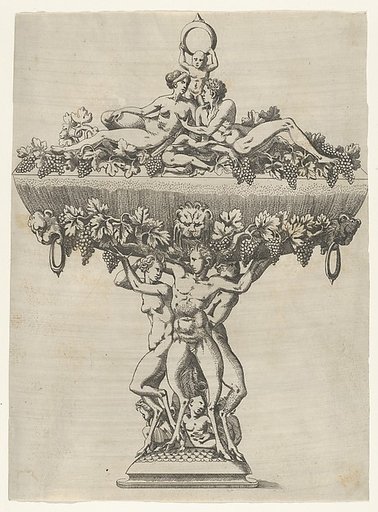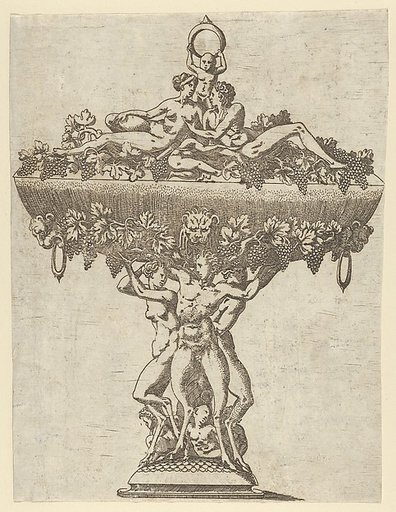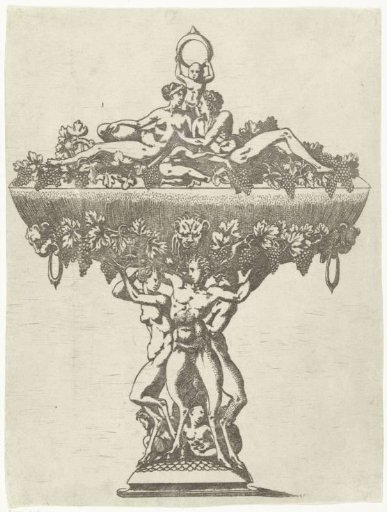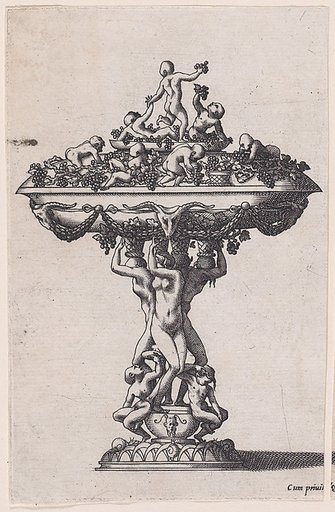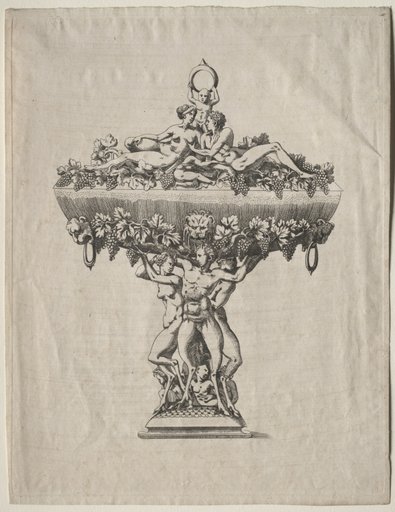
Covered Cup with Grape Festoon
From the collection of Cleveland Museum of Art. Free to download, adapt and use — no permission needed.
When the French king Francis I (reigned 1515–47) decided to renovate his hunting lodge at Fontainebleau, near Paris, he set the stage for the development of Mannerism in France. In the early 1530s, Francis I successfully lured the Italian artists Rosso Fiorentino (1495–1540) and Francesco Primaticcio (1504/5–1570) to Fontainebleau to participate in its redecoration. The most influential project at Fontainebleau was the long corridor now known as the Gallery of Francis I. Here, Rosso developed an innovative system of wall decoration that combined painting with stucco sculpture in high relief. The type of art that began to flourish under Rosso and Primaticcio in the 1530s is known today as the School of Fontainebleau. The term also refers to a stylistically coherent group of etchings and engravings. Many of these are important records of now lost decorations created at the chateau.
Cleveland Museum of Art’s own description