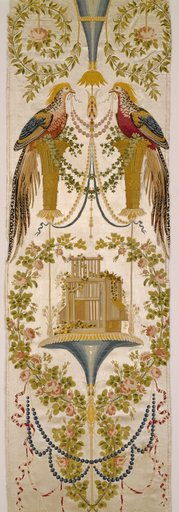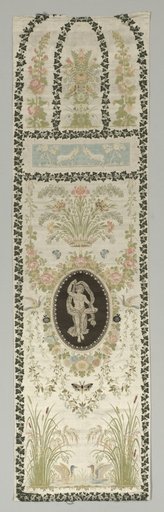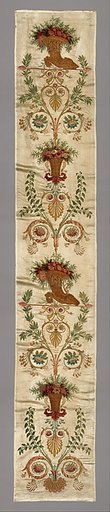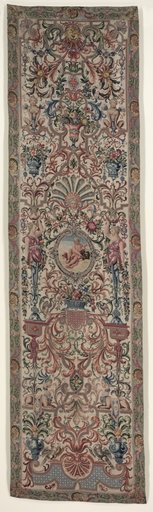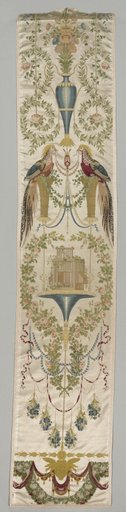
Wall Covering, "The Pheasants" from the "Vatican Verdures" Series
From the collection of Cleveland Museum of Art. Free to download, adapt and use — no permission needed.
France developed a thriving silk industry in Lyon with the goal of becoming the fashion center of Europe. Employment soared to some 20,000 workers by the time of the French Revolution in 1789. Designs changed annually, colors established new fashions, and spectacular silks were produced during the late 1700s. Dugourc, an architect who studied in Italy, became a renowned textile designer for Camille Pernon & Cie, purveyors to King Louis XVI (reigned 1774–92). He created this elaborate, balanced composition as part of elegant wall coverings for the Casita del Labrador, near Madrid. Dugourc named the series after frescos by Raphael in the Vatican.
Cleveland Museum of Art’s own description