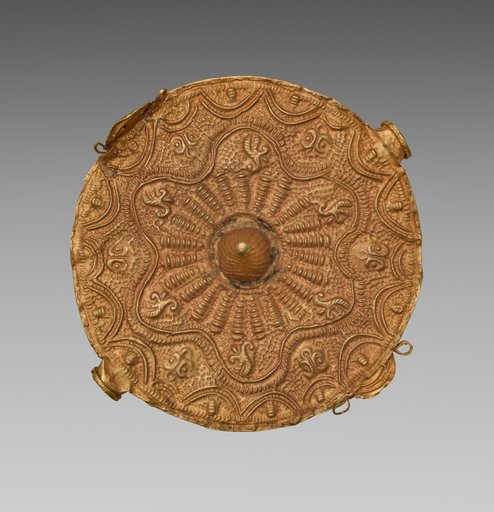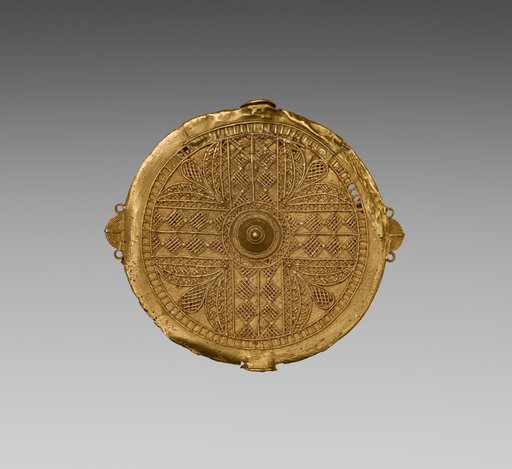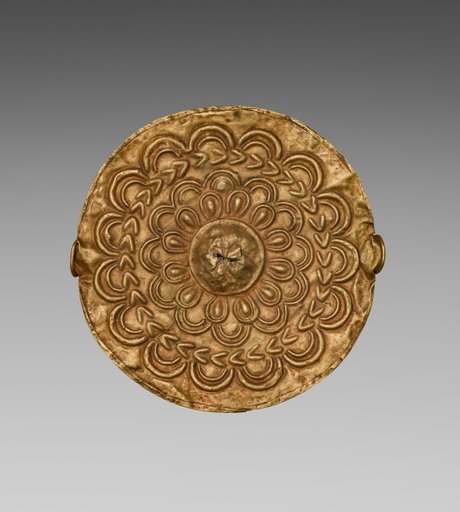
Disk Pendant (akrafokɔnmu)
From the collection of Cleveland Museum of Art. Free to download, adapt and use — no permission needed.
Gold discs dangling on the chests of Akan state officials and elites showed their rank and duties. Worn by these akrafo (“soul people”) since the 1800s, they are often linked to kradware, officials who represent and purify (“wash”) the king’s soul. To make them, goldsmiths cast or flattened gold. Muslim North African gold coins likely inspired their form and material, while concentric water rings influenced their composition. This small disc is a typical pre-colonial example: asantehene (king) Prempeh I reportedly owned this disk. The British emptied his treasury after deposing and exiling him in 1896. Gold ornament making ceased until 1924; court officials now wear large discs.
Cleveland Museum of Art’s own description