Vesperbild (Pietà)
From the collection of Cleveland Museum of Art. Free to download, adapt and use — no permission needed.
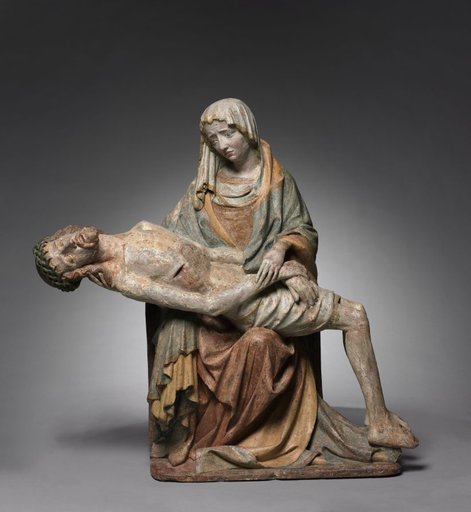
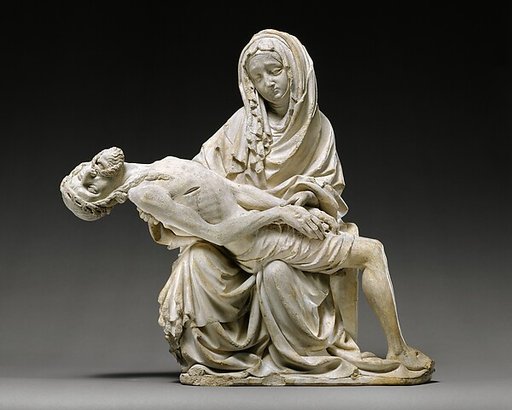
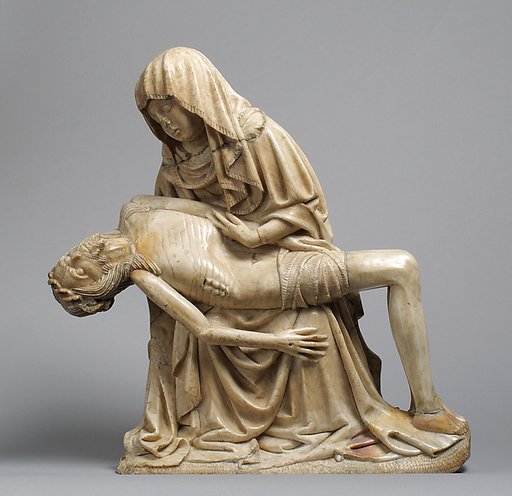
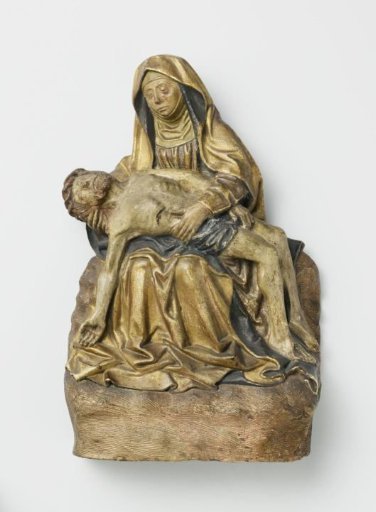
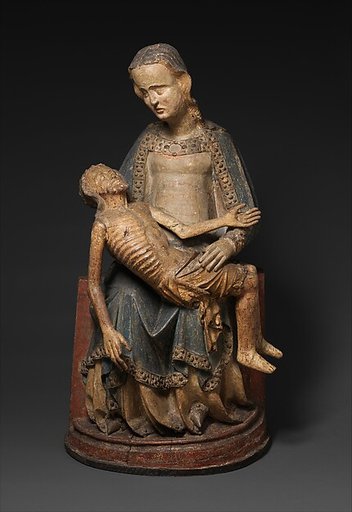
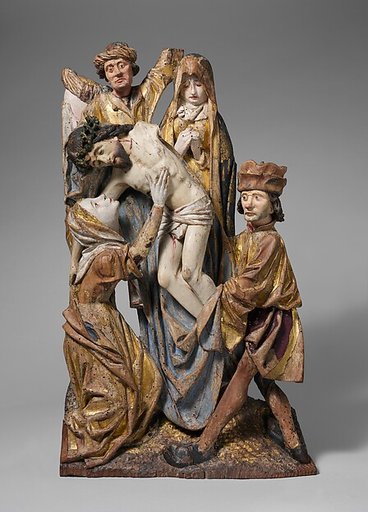
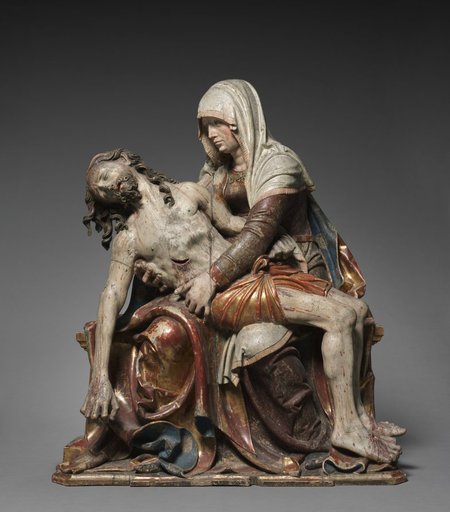
Depicting the Virgin cradling Christ’s dead body, works like this one were known in German as vesperbilds , owing to their incorporation into the liturgy of the evening prayer (vespers) on Good Friday. The word pietà —from the Latin pietas , meaning "piety" or "compassion"—was also used to describe such works. Like other devotional image types that emerged in southern Germany in the later medieval period, vesperbilds encouraged viewers to contemplate Christ’s suffering and empathize with the Virgin’s sorrows more directly and emotively than ever before. This anonymous German artist is named after one of his most important works, the high altar of the church of Rabenden in the Chiemgau, the foothills of the Alps. The sculpture was likely placed in a secondary chapel in a Bavarian church.
Cleveland Museum of Art’s own description