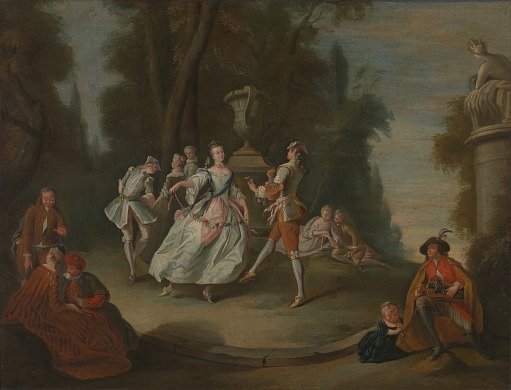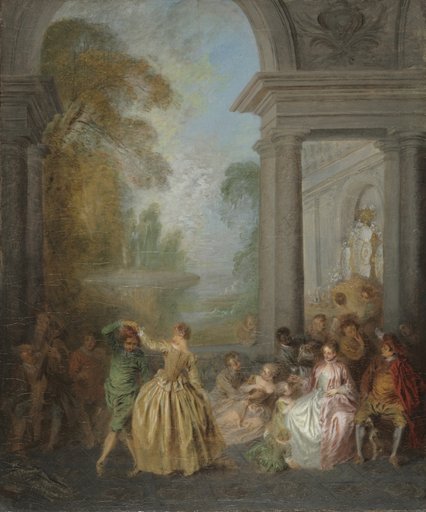
Dancers in a Pavilion
From the collection of Cleveland Museum of Art. Free to download, adapt and use — no permission needed.
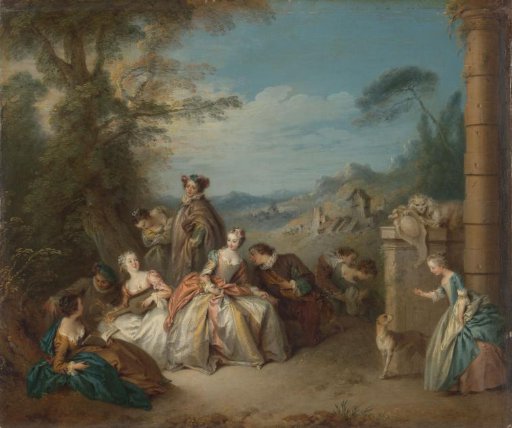
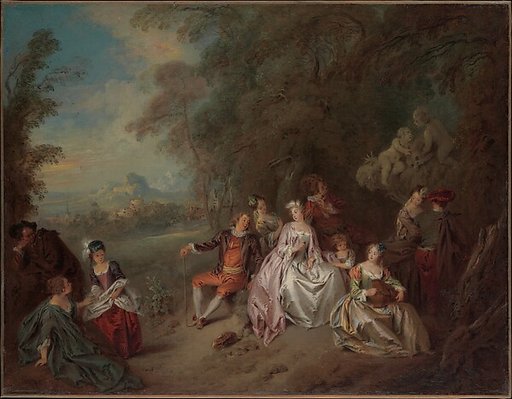
Jean-Baptiste Pater was the sole student of the early 18th-century artist Antoine Watteau (1684–1721). Upon Watteau's death, Pater finished some of his teacher's compositions and copied them for reproduction. Due to this association, Pater was in the position to capitalize on the popularity of the fête galante genre invented by Watteau. This genre was based on the fêtes held by the aristocracy to escape the tedium of life at the French court, and depict the same amusements: conversation, music, dance, and the pursuit of love. Dancers in a Pavilion is a pastiche of several works by Watteau. The couple in this painting is most likely performing the minuet, which was considered the most flirtatious of dances.
Cleveland Museum of Art’s own description