Cranes and Serpents
From the collection of Cleveland Museum of Art. Free to download, adapt and use — no permission needed.
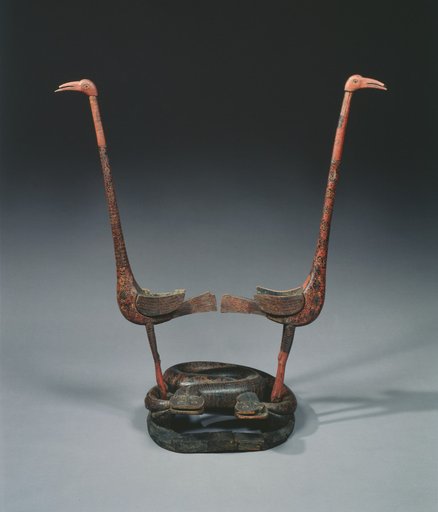
A different style of ritual art developed in the state of Chu in South China. In addition to bronze vessels, lacquered wood artifacts expanded the repertory of ritual implements. This extraordinary sculpture was probably a drum stand for supporting a suspended drum in ritual ceremonies. It is unique among other excavated drum stands of the Chu, which typically show two birds standing on tigers. The theme of the bird stepping on the serpent was common in the Chu visual culture. Yet the slender proportions and seemingly flimsy structure of this particular set raise the question of whether it was utilitarian or mostly served symbolic functions in the tomb. The birds' and serpents' bodies have designs painted in red lacquer and yellow pigment against the black lacquer. Scientific analyses confirm the additional use of a blue or green pigment that has been discolored over time.
Cleveland Museum of Art’s own description