Embroidered Border: The Making of Unleavened Bread and the Israelites Sent Away
From the collection of Cleveland Museum of Art. Free to download, adapt and use — no permission needed.
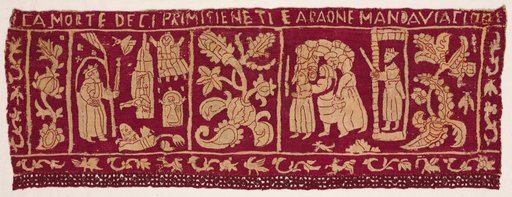
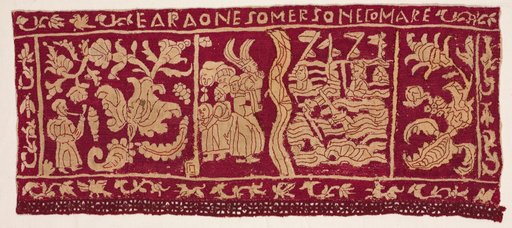
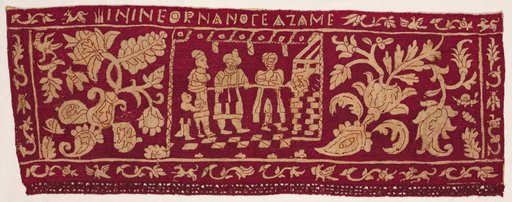
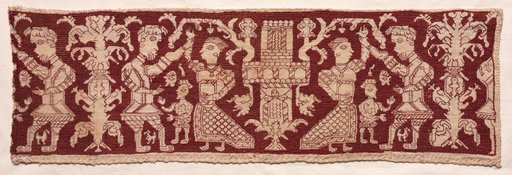
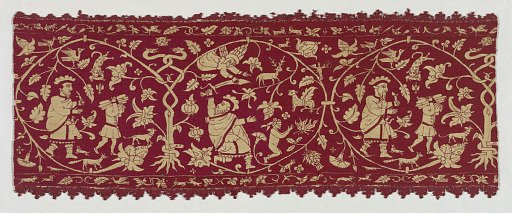
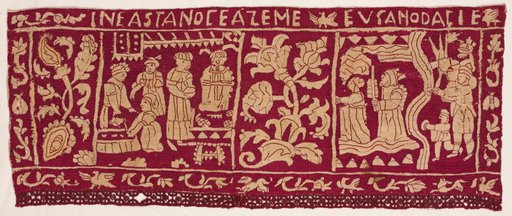
The border fragments on the left tell the story of the Israelites baking unleavened bread during the first Passover, after which they were delivered out of captivity in Egypt. In the top panel, bakers mix and knead the dough; the bottom panel shows the bakers standing on a tiled floor while placing the bread into a brick oven. This common household scene would have been familiar to Italian audiences during the Renaissance. Two fragments depict events recorded in the book of Exodus. In the top panel, the pharaoh is shown releasing the Israelites after the last plague (1939.355). In the bottom panel, he changes his mind and pursues them across the parted Red Sea, only to be swallowed up after the Israelites safely crossed (1939.352).
Cleveland Museum of Art’s own description