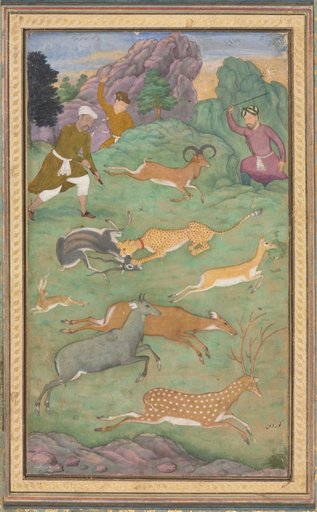
Antelope and deer hunt
From the collection of Cleveland Museum of Art. Free to download, adapt and use — no permission needed.
The Mughals used trained cheetahs, such as this one wearing a red collar, to capture prey during hunting expeditions in the wilderness. The metaphor of the hunt was also a potent image in Persian literature, in which the protagonist finally achieves a desired goal. The central image of the cheetah catching the black buck—a frequently repeated visual trope—resonates with the desire of Prince Salim (who was passionate about hunting) to capture the throne of the Mughal Empire from Akbar, his father. Between 1600 and 1605, when Prince Salim set up his own royal court in defiance of his father, he convinced some imperial artists to join him. The young Govardhan, a Hindu who would go on to achieve high stature in the atelier of the next two emperors, was one of them.
Cleveland Museum of Art’s own descriptionSimilar works
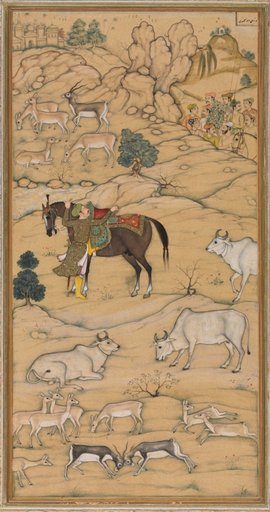 Akbar Mounting his Horse; page from the Chester Beatty Akbar Nama (History of Akbar)
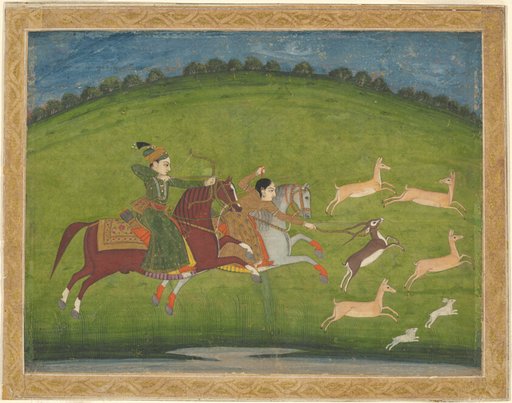 Prince and Princess Hunting Blackbuck
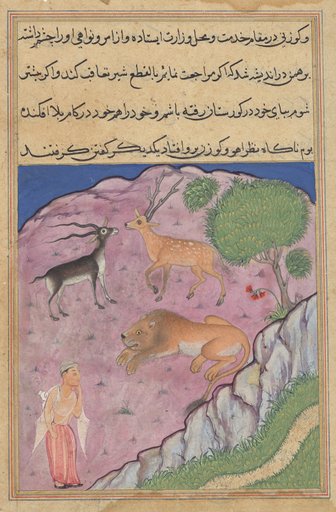 The Brahman comes upon a lion who has a deer and a gazelle as his viziers, from a Tuti-nama (Tales of a Parrot): Twenty-first Night
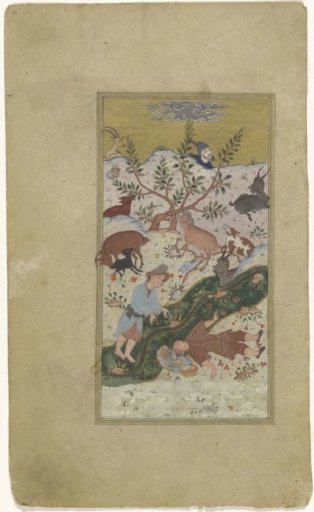 Two reclining figures in an Arcadian landscape
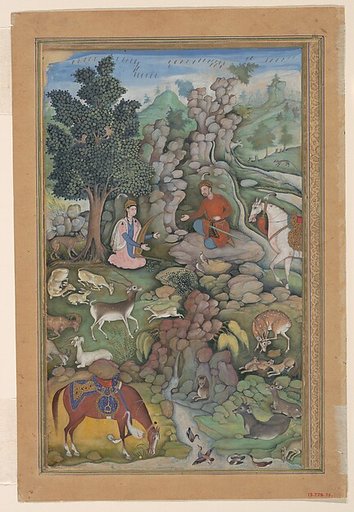 "Bahram Gur Sees a Herd of Deer Mesmerized by Dilaram' s Music", Folio from a Khamsa (Quintet) of Amir Khusrau Dihlavi
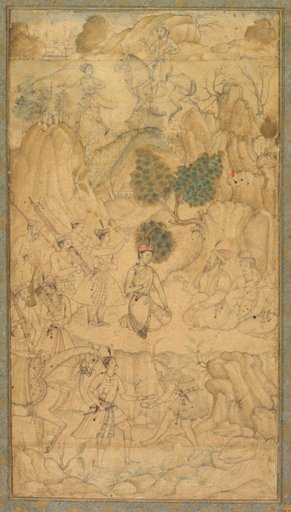 A Prince Visiting a Holy Man in a Rocky Landscape (recto)