Chasse
From the collection of Cleveland Museum of Art. Free to download, adapt and use — no permission needed.
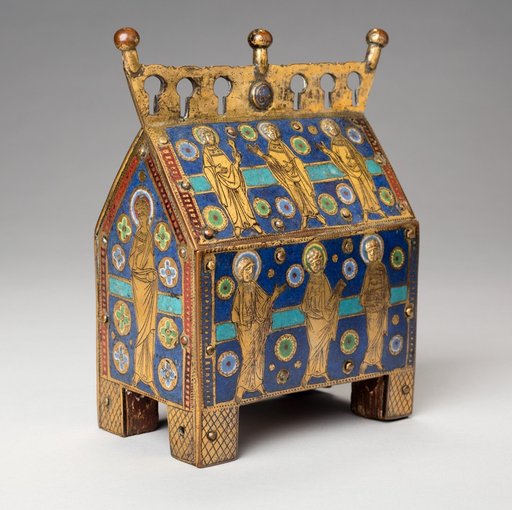
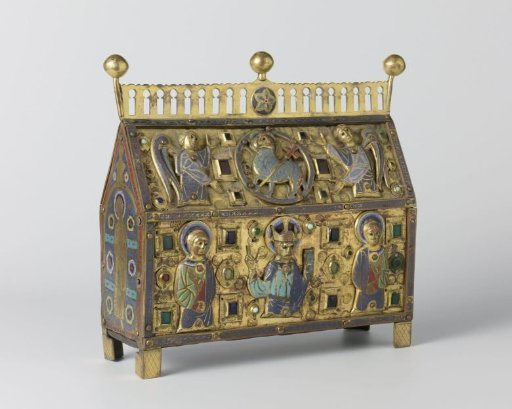
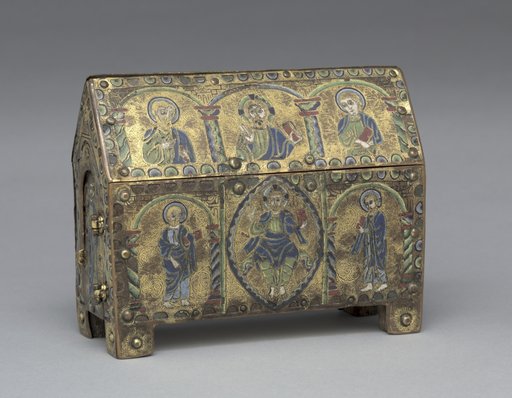
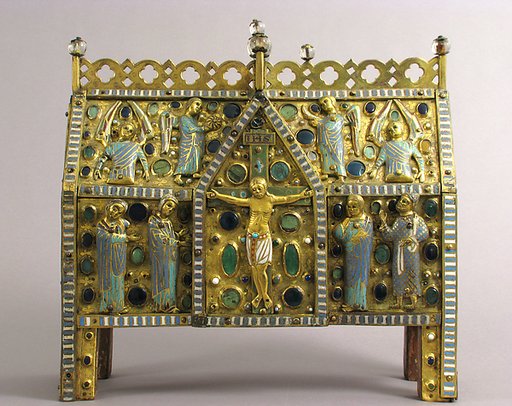
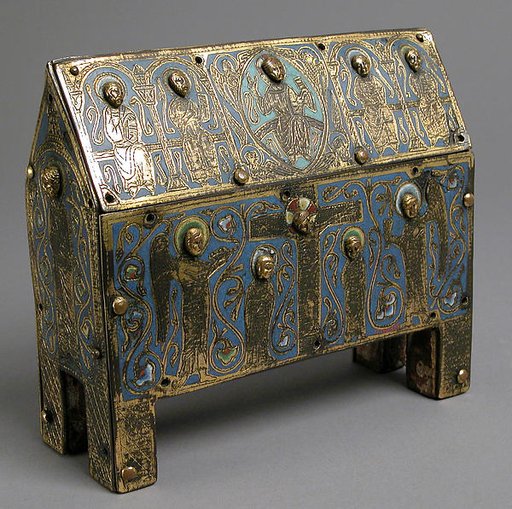
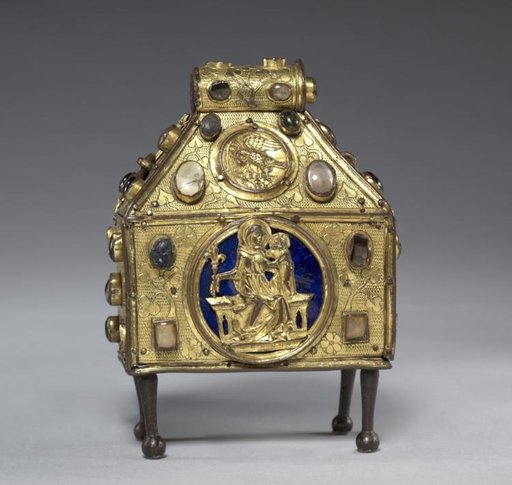
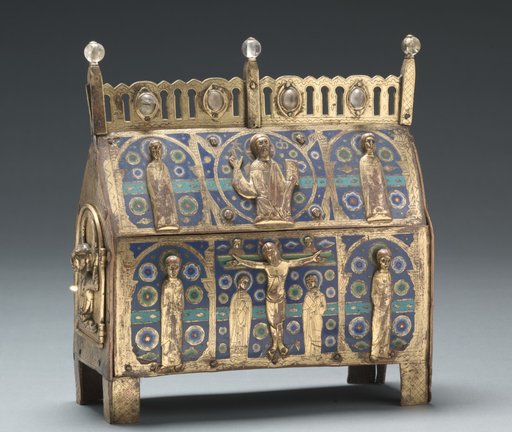
A chasse is a container with a pyramid-shaped roof that once served as a shrine for sacred relics. During the medieval period, chasses like this one were placed on church altars during high feast days to allow the faithful to venerate their sacred contents. The chasse’s design and imagery follow a common formula with Christ’s Crucifixion and Majesty decorating the central fields of its principal face. The back consists of two panels with identical decoration. Each features three busts of angels inscribed in medallions. Of the chasse’s lateral sides, only one is preserved in its original state, decorated with the figure of an imposing angel emerging from a bank of clouds.
Cleveland Museum of Art’s own description