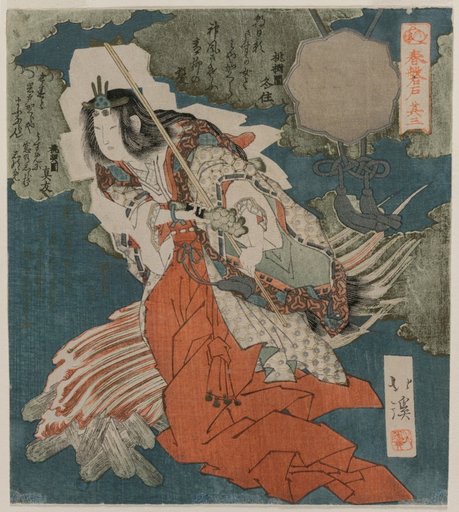
Uzume no Mikoto from The Cave Door of Spring
From the collection of Cleveland Museum of Art. Free to download, adapt and use — no permission needed.
These elegant surimono prints come from a set of five images inspired by the legend of the Shinto Supreme Sun Goddess, Amaterasu. She was once so offended by her brother that she retreated into a cave, leaving the earth in darkness. Several attempts to lure her out with cocks crowing, music-making, and a goddess dancing failed, but a mirror hung from a nearby tree made Amaterasu curious, bringing her to the entrance of the cave. A stone was quickly placed at the entrance to block her way back into the cave, and light was restored to the world. Each print is set against a blue evening sky with embossed clouds enriched with gold, silver, and copper.
Cleveland Museum of Art’s own descriptionSimilar works
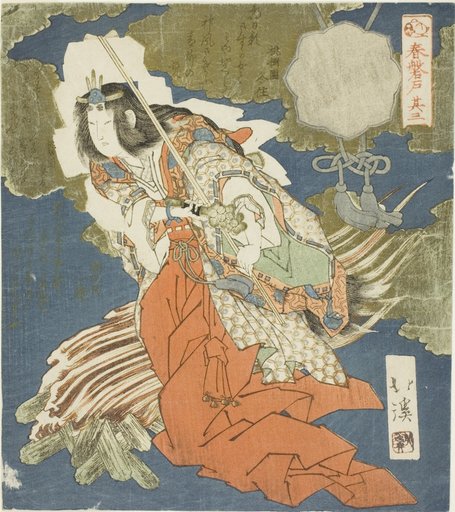 Ama no Uzume, No. 3 (Sono san) from the series "The Boulder Door of Spring (Haru no iwato)"
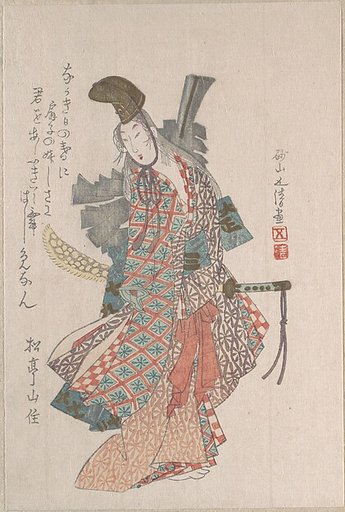 Dancing Girl Wearing a Sword
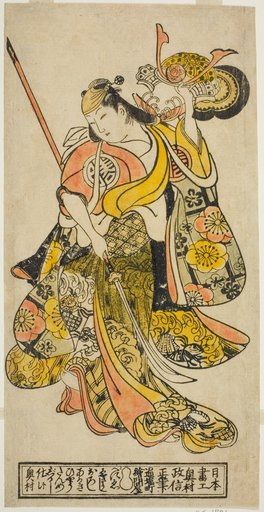 The Actor Hayakawa Shinkatsu as Toyohime in the play "Goshozome Koyo Gunki," performed at the Ichimura Theater in the eleventh month, 1727 (?)
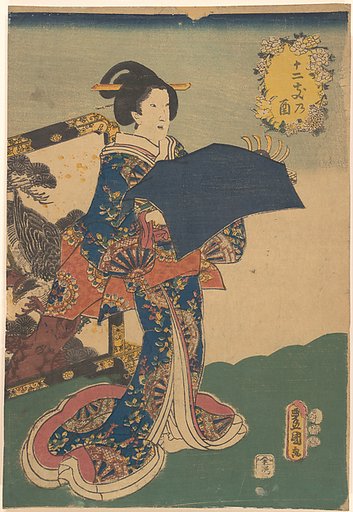 Print
Print
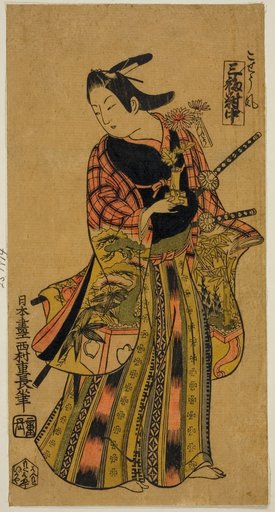 In the Style of a Page (Kosho fu), Center Sheet of Triptych (Sanpukutsui chu)
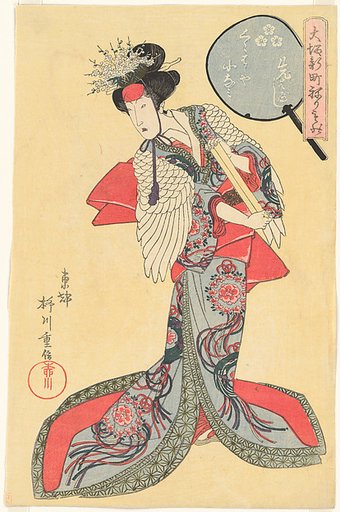 Konami of the Kurahashiya in the Front Group of Musicians (Saki-bayashi), from the series Costume Parade of the Shinmachi Quarter in Osaka (Ōsaka Shinmachi nerimono)