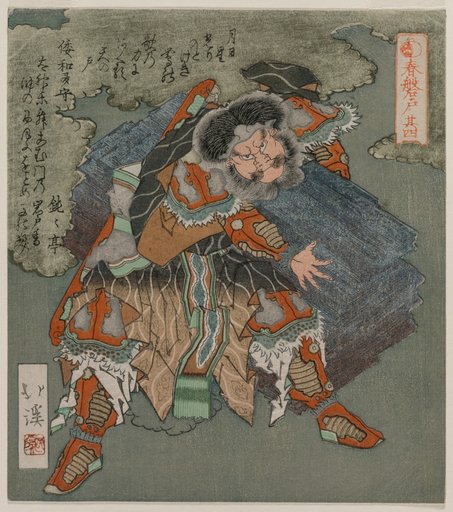
Ama no Tajikara no Mikoto from The Cave Door of Spring
From the collection of Cleveland Museum of Art. Free to download, adapt and use — no permission needed.
These elegant surimono prints come from a set of five images inspired by the legend of the Shinto Supreme Sun Goddess, Amaterasu. She was once so offended by her brother that she retreated to a cave, leaving the earth in darkness. Several attempts to lure her out with cocks crowing, music-making, and a goddess dancing failed, but a mirror hung from a nearby tree made Amaterasu curious, bringing her to the entrance of the cave. A stone was quickly placed at the entrance to block her way back into the cave, and light was restored to the world. Each print is set against a blue evening sky with embossed clouds enriched with gold, silver, and copper.
Cleveland Museum of Art’s own descriptionSimilar works
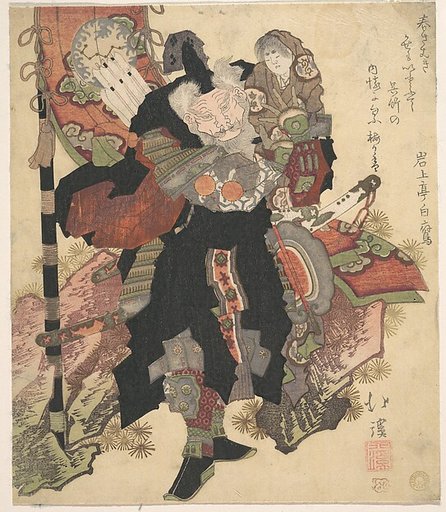 Chinese Warrior Carrying a Child upon His Shoulders
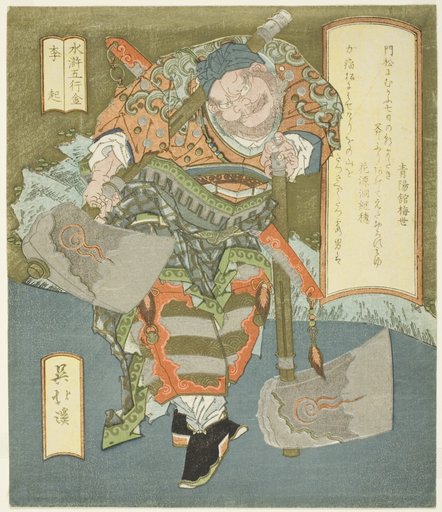 Metal: Li Kui (Kin, Riki), from the series "The Five Elements of The Water Margin (Suiko gogyo)"
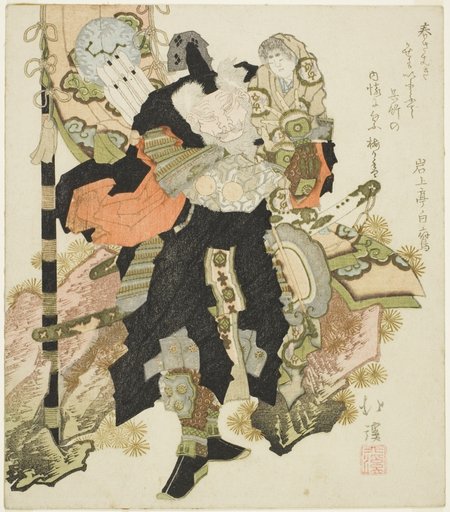 Takenouchi no Sukune carrying the Emperor Ojin
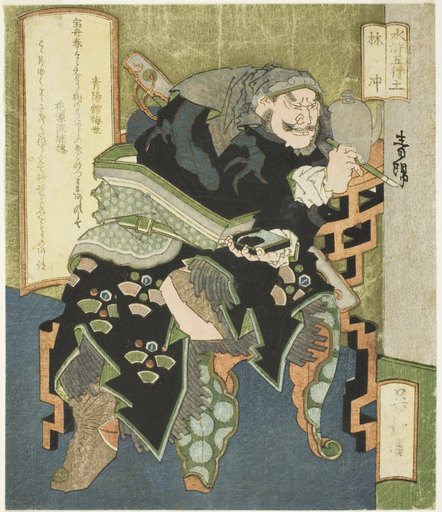 Earth: Lin Chong (Do, Rinchu), from the series "The Five Elements of The Water Margin (Suiko gogyo)"
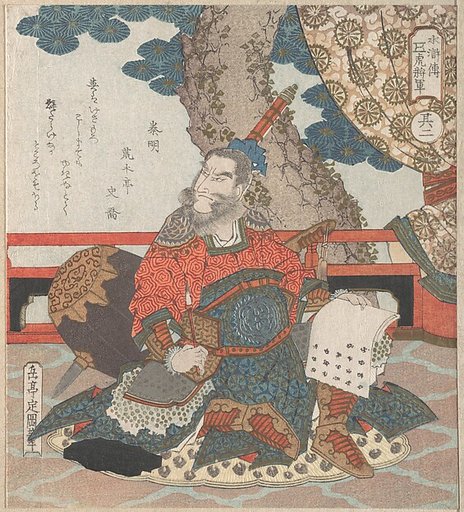 Chinese General "Tiger" from the Story "Suikoden"
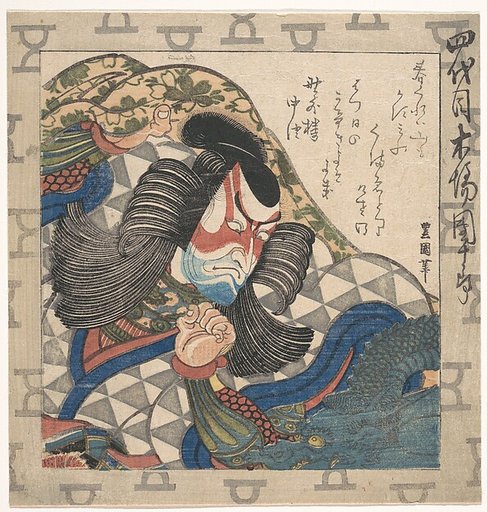 Ichikawa Danjuro IV in the Role of Kagekiyo in the Play Enlightenment from a Series of Portraits of Danjūrō