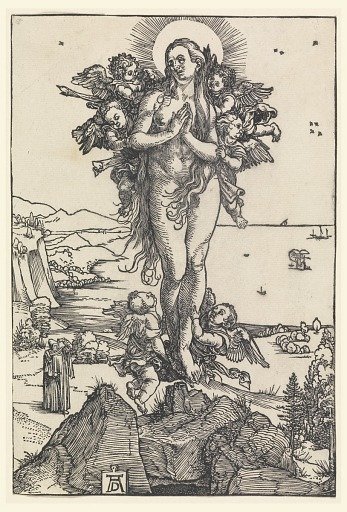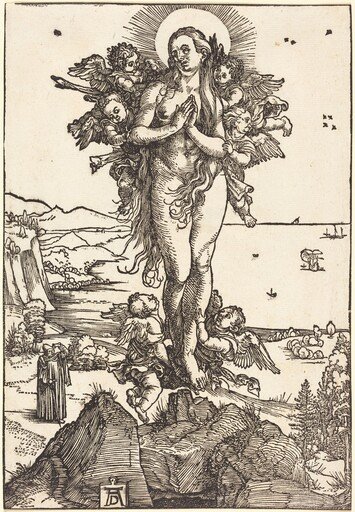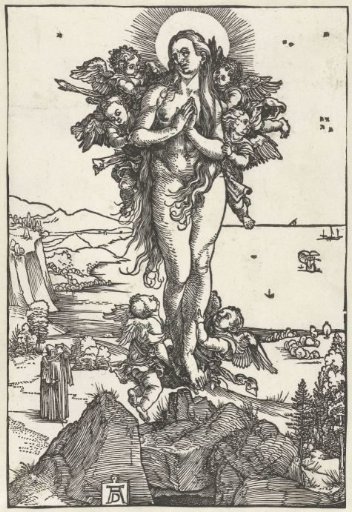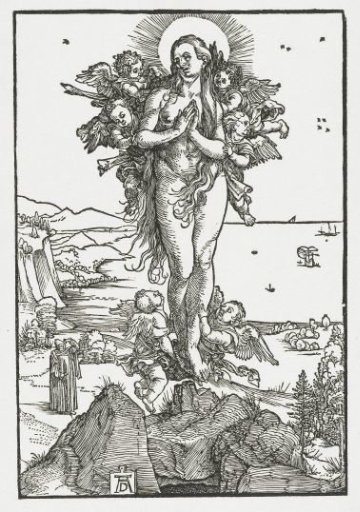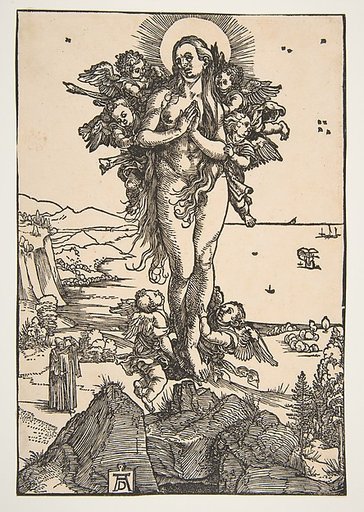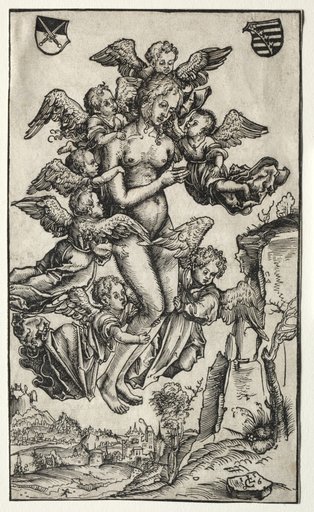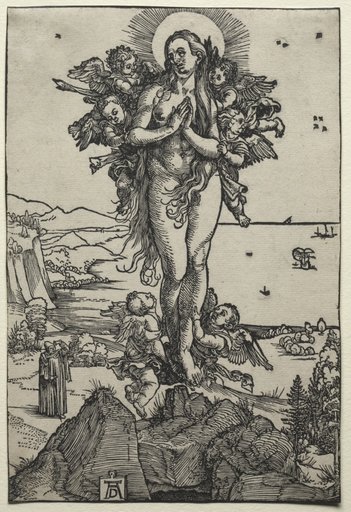
The Ecstasy of Mary Magdalene
From the collection of Cleveland Museum of Art. Free to download, adapt and use — no permission needed.
Dürer’s woodcut of Mary Magdalene represents a popular subject in German art and is considered a schlechtes Holzwerk, a simple woodcut intended for a general audience. According to a medieval book of saints’ lives known as the Golden Legend, Mary Magdalene spent the last 30 years of her life as a hermit outside of Marseilles, France, where she was miraculously borne aloft to heaven seven times a day to hear the choir of angels. Considered a fallen woman in her early life, Mary earned redemption through her complete devotion to Christ. During this period, Dürer was preoccupied with the laws of human proportion and the female figure. Mary Magdalene’s powerful legs and widened hips are comparable to the female nudes in Dürer’s The Dream of the Doctor and Adam and Eve.
Cleveland Museum of Art’s own description