CC0 · no rights reserved
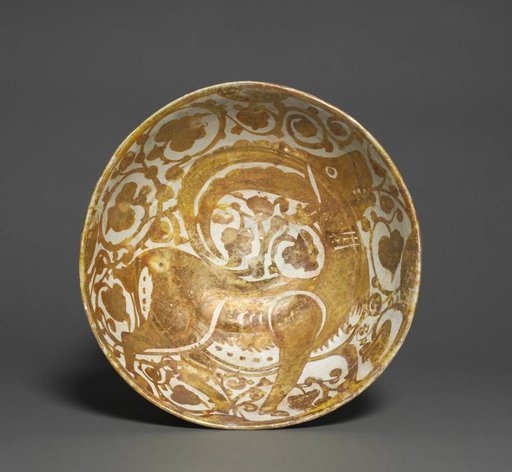
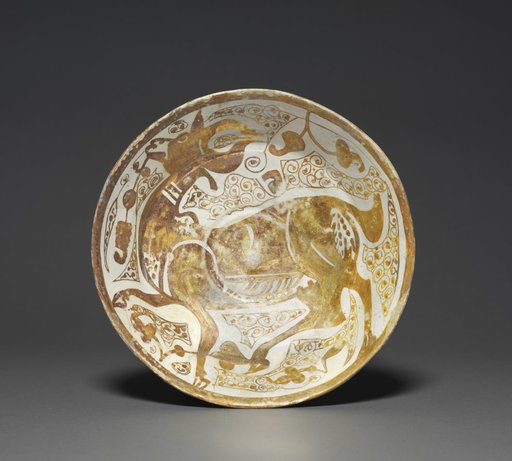
Luster Bowl with Antelope
From the collection of Cleveland Museum of Art. Free to download, adapt and use — no permission needed.
About this work
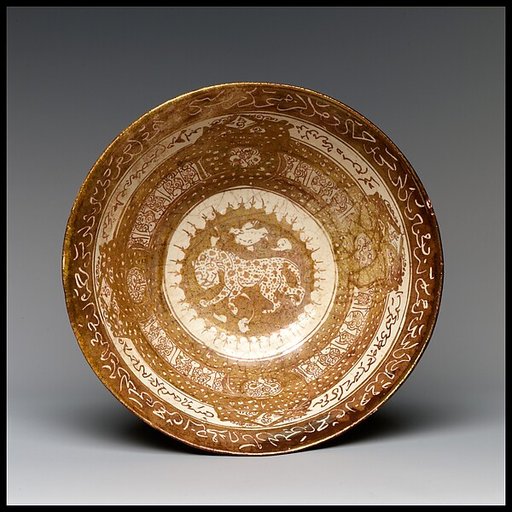
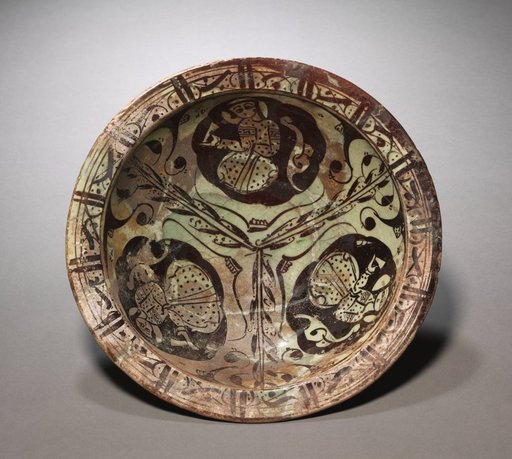
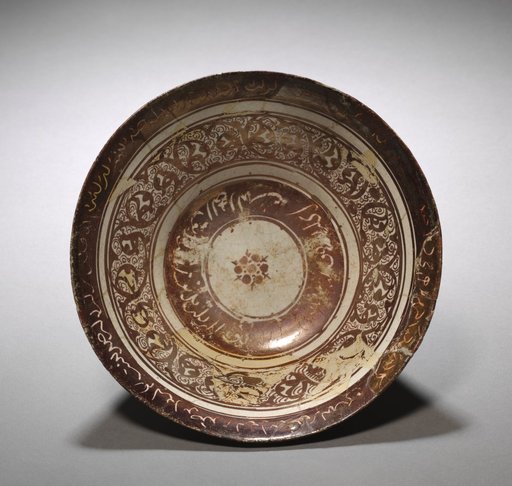
The production of lusterware flourished in the prosperous Fatimid court in Cairo. The technique used metal oxides to paint designs onto a ceramic vessel. It was expensive and unpredictable but, if done correctly, would create a glistening effect. Fatimid lusterware motifs are quite varied, drawing on Greek and Christian themes, floral and vegetal designs, and a menagerie of animals. Some scenes focus on a single creature, as is the case with the antelope on this dish, while others evoke courtly themes of hunting or banquets.
Cleveland Museum of Art’s own descriptionCredit lineLuster Bowl with Antelope, 1000s. Egypt, Fustat (Old Cairo), Fatimid period (909–1171). Earthenware with luster-painted design; diameter: 25.4 cm (10 in.); overall: 6.8 cm (2 11/16 in.). The Cleveland Museum of Art, Purchase from the J. H. Wade Fund, 1944.476