CC0 · no rights reserved
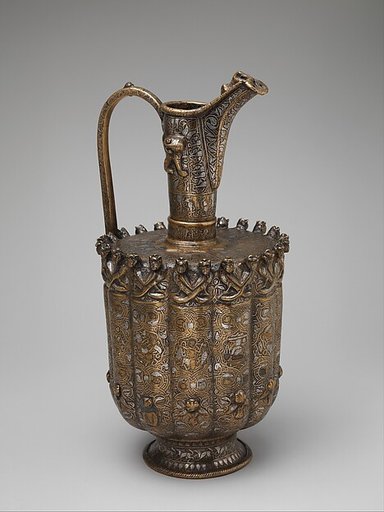
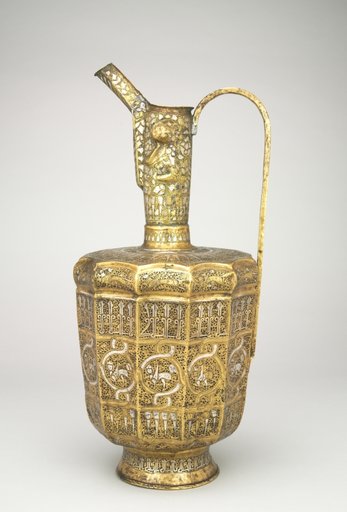
Twelve-sided Ewer with Sphinxes and Human-Headed Inscriptions
From the collection of Cleveland Museum of Art. Free to download, adapt and use — no permission needed.
About this work
The spout and neck of the ewer display a crouching and seated lion in raised relief. Winged hare-like animals march around the top of the body, set off by foliate scrolls, while sphinxes process around the center. The bottom of the ewer’s body is encircled by an inscription with human heads, which only appear on metalwork in Islamic art. Ewers like this, and similar elaborate vessels, would have been used in court banquets and elite homes across the Islamic world.
Cleveland Museum of Art’s own descriptionCredit lineTwelve-sided Ewer with Sphinxes and Human-Headed Inscriptions, 1300–1350. Iran, Khurasan, Ilkhanid period (1256–1353). Hammered sheet of brass inlaid with silver; overall: 44.8 cm (17 5/8 in.). The Cleveland Museum of Art, Purchase from the J. H. Wade Fund, 1945.27