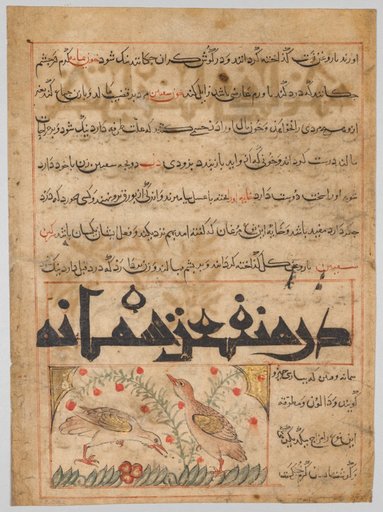
Folio from a Persian Manafi‘ al-Hayawan (The Benefits of Animals) of Abu Said Ubaid-Allah ibn Jibrail ibn Bakhtishu (died 1058–68) (verso)
From the collection of Cleveland Museum of Art. Free to download, adapt and use — no permission needed.
The Benefits of Animals describes the physical characteristics of many different animals and provides their medicinal uses at the time. Most of the text on this page is a continuation of a section about doves from the previous page. It says, for example, that blood from dove wings cures sore eyes and cooked dove egg mixed with honey and a little borax is good for those with liver complaints. The large title written in Kufic script near the bottom of the page translates as “The Quail and its Qualities and Benefits,” marking the beginning of the next section. The illustration depicts two quails in active postures. The Mongol ruler of Iran from 1295 to 1304, Ghazan Khan, commissioned a Persian translation of the Arabic text, and this important page is from one of the earliest illustrated manuscripts.
Cleveland Museum of Art’s own descriptionSimilar works
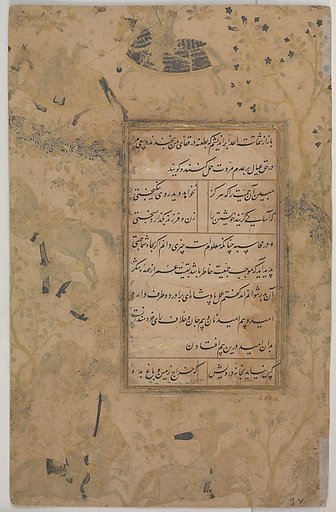 Page of Calligraphy from an Anthology of Poetry by Sa`di and Hafiz
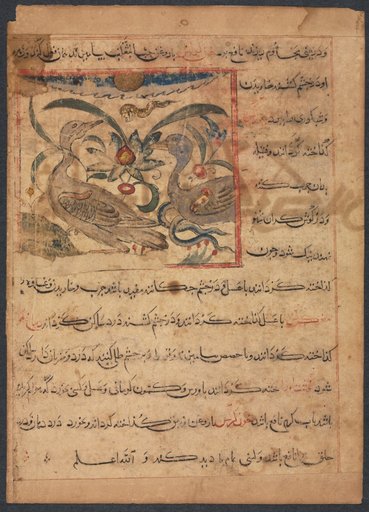 "Benefits of the Parts of Vultures" (From the Manafi' al-Haywan of Abu Sai'd Ubayd-Allay Ibn Bakhtishu) (verso)
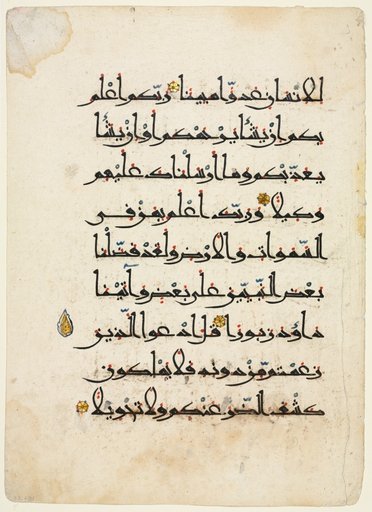 Leaf from a Qur'an
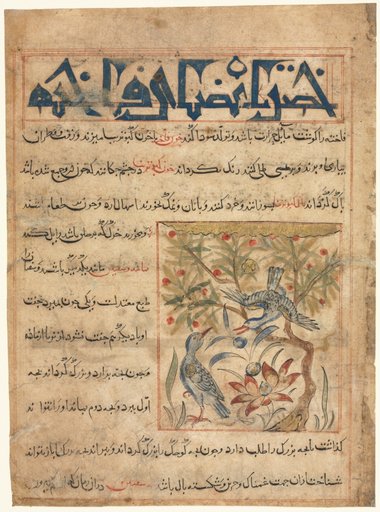 Folio from a Persian Manafi‘ al-Hayawan (The Benefits of Animals) of Abu Said Ubaid-Allah ibn Jibrail ibn Bakhtishu (died 1058–68) (recto)
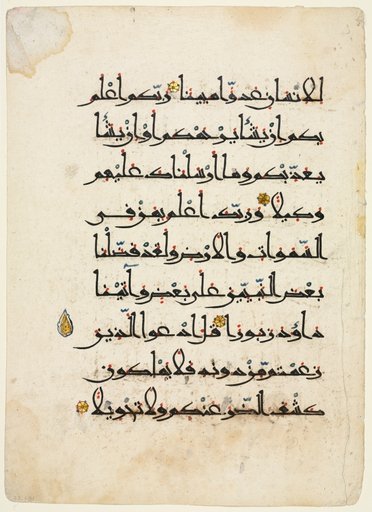 Leaf from a Qur'an (recto)
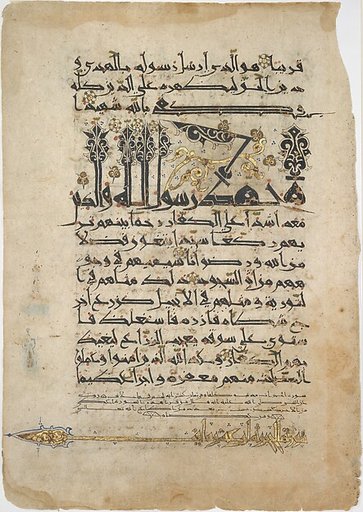 Folios from a Qur'an Manuscript in Floriated "New Style" Script