CC0 · no rights reserved
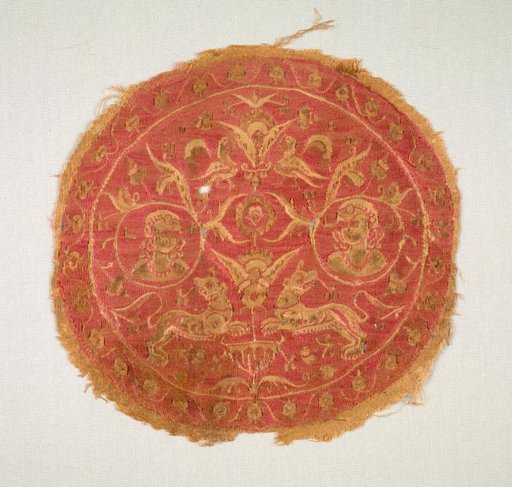
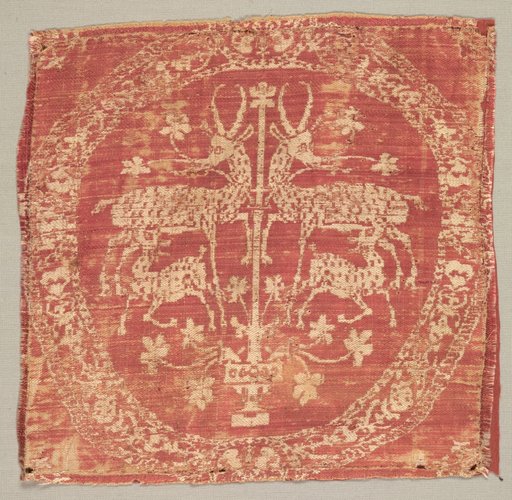
Square Ornament from a Tunic
From the collection of Cleveland Museum of Art. Free to download, adapt and use — no permission needed.
About this work
The folded edges on all four sides of this luxury silk fragment indicate that it decorated a unisex linen tunic. The symmetrical deer with suckling fawn flanking a simplified central tree of life continues an ancient theme in a naturalistic style. The roundel is connected on all four sides and displays heart-shaped floral borders. This fragment is said to have been found in Akhmim, Egypt, south of Cairo, where, during the 1880s, numerous related silk fragments were excavated.
Cleveland Museum of Art’s own descriptionCredit lineSquare Ornament from a Tunic, 700s. Egypt or Syria, Umayyad period (661–750) or Abbasid period (750–1258). Silk; complementary weft-faced twill weave with inner warps (samite); overall: 23.5 x 24.2 cm (9 1/4 x 9 1/2 in.); mounted: 31.1 x 31.8 cm (12 1/4 x 12 1/2 in.). The Cleveland Museum of Art, Purchase from the J. H. Wade Fund, 1947.192