CC0 · no rights reserved
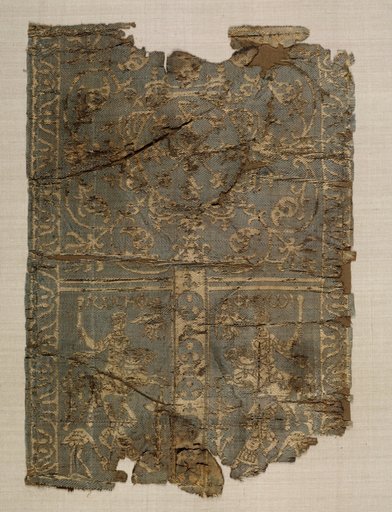
Silk Sleeve Decoration with Hunters
From the collection of Cleveland Museum of Art. Free to download, adapt and use — no permission needed.
About this work
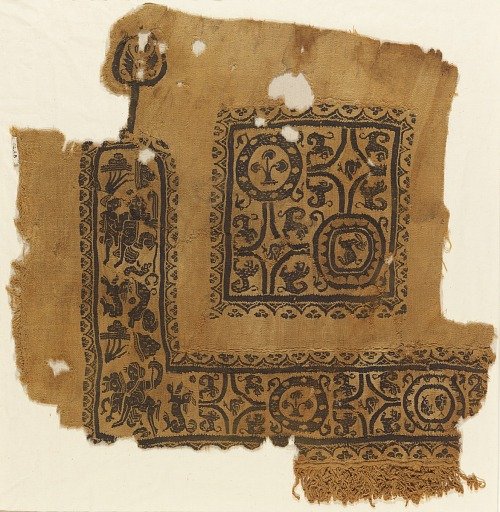
This silk sleeve blends technical and stylistic elements that occurred in early Islamic art. The sides of the sleeve are decorated with a lotus flower design, an ancient Egyptian motif that was absorbed into Hellenistic and Byzantine art. The upper panel displays a large medallion composed of leaves and palmettes, common vegetal motifs in Islamic art of this period. Below, the mace-wielding horseman is identified in Coptic inscriptions as Joseph, father of Jesus and saint within the Coptic faith. The image is likely derived from the Byzantine representation of the victorious emperor.
Cleveland Museum of Art’s own descriptionCredit lineSilk Sleeve Decoration with Hunters, 700s. Egypt or Syria, Umayyad period (661–750) or Abbasid period (750–1258). Silk: complementary weft-faced twill with inner warps (samit); overall: 28.9 x 20.3 cm (11 3/8 x 8 in.); mounted: 37.8 x 29.2 cm (14 7/8 x 11 1/2 in.). The Cleveland Museum of Art, Purchase from the J. H. Wade Fund, 1947.193