CC0 · no rights reserved
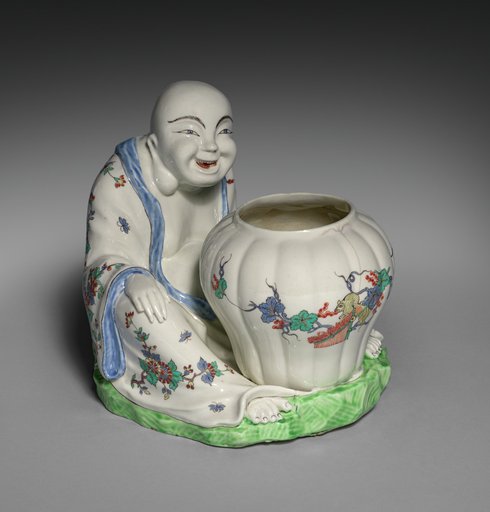
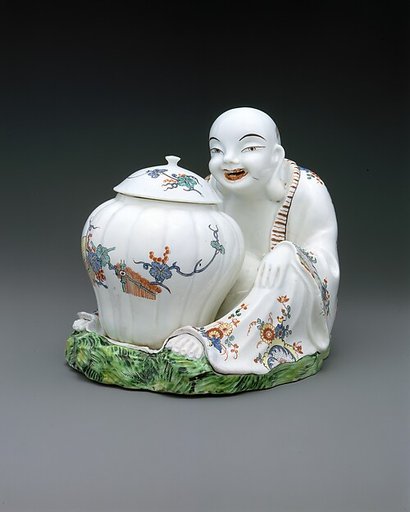
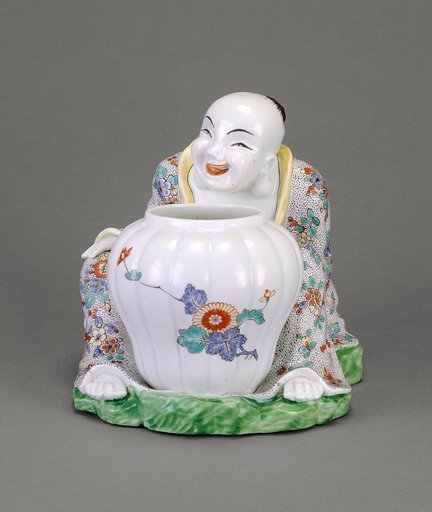
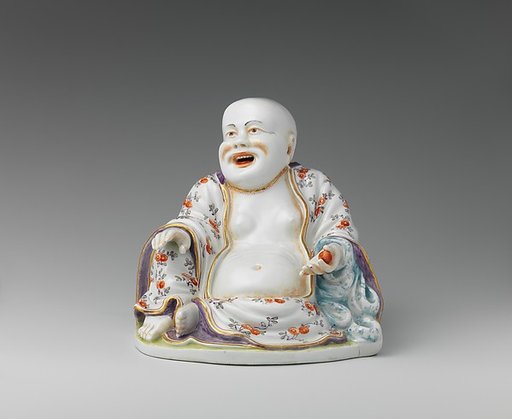
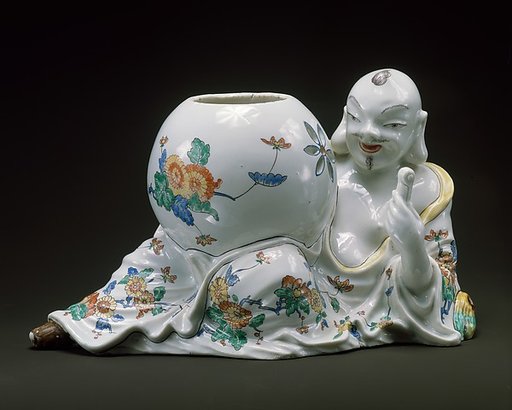
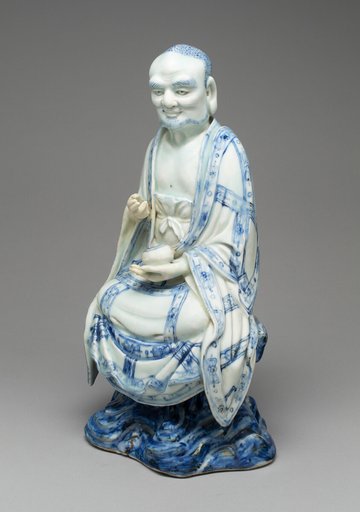
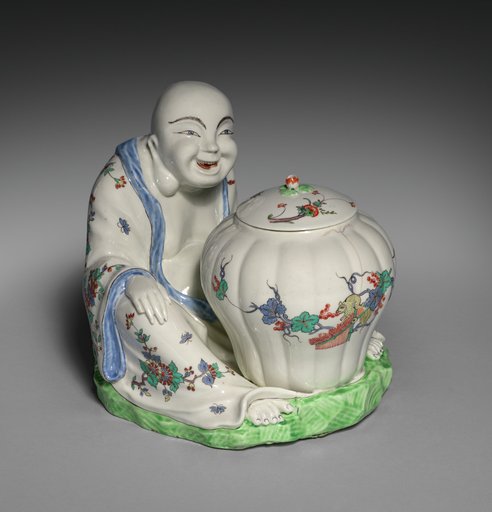
Figure of Budai or Hotei with Jar
From the collection of Cleveland Museum of Art. Free to download, adapt and use — no permission needed.
About this work
The production of decorative figures like this one, referred to as magots or pagodes in European texts, was the result of an 18th-century European interest in Chinese and Japanese culture and porcelain. Budai, pronounced Hotei in Japanese, was a semilegendary Chinese monk known in Japan through the transmission of Chan Bhuddism. This figure’s decoration with multicolor overglaze enamels on a milky-white is typical of Japanese Kakiemon style.
Cleveland Museum of Art’s own descriptionCredit lineFigure of Budai or Hotei with Jar, c. 1735–40. Chantilly Porcelain Factory (French). Tin-glazed soft-paste porcelain with enamel decoration; overall: 17.2 cm (6 3/4 in.). The Cleveland Museum of Art, Grace Rainey Rogers Fund, 1947.62