CC0 · no rights reserved
Scenes from the Tale of Genji
From the collection of Cleveland Museum of Art. Free to download, adapt and use — no permission needed.
About this work
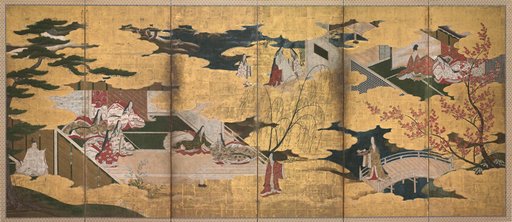
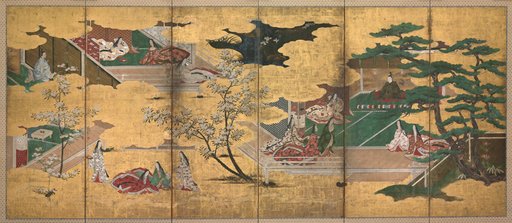
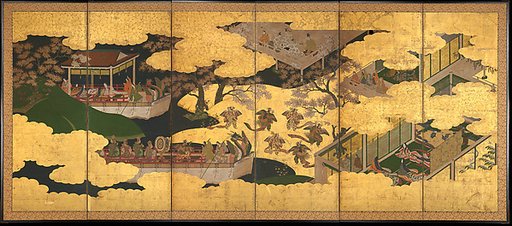
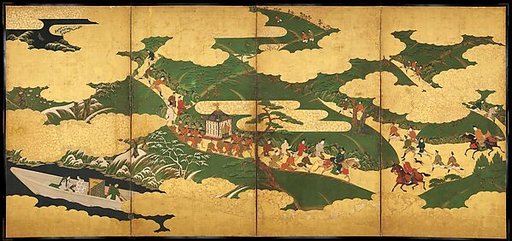
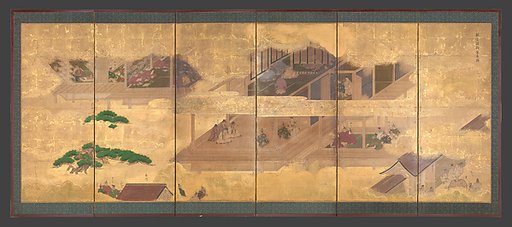
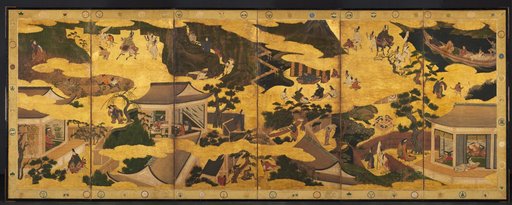
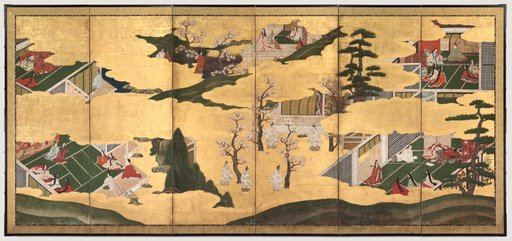
Folding screens served as temporary dividers in traditional Japanese open-plan architectural spaces. This pair was inspired by Japan’s most celebrated work of literature, the Tale of Genji , written by Murasaki Shikibu, an attendant to the empress in the early 11th-century imperial court. The novel follows the love life of the “Shining Prince” Genji and delves into the psychological states of his many companions. Distinct episodes are nestled within a matrix of golden clouds and landscape elements. Each screen includes six episodes presented in a nonlinear fashion, capturing scattered highlights of the story.
Cleveland Museum of Art’s own descriptionCredit lineScenes from the Tale of Genji (源氏物語図屏風), late 1700s. Japan, Edo period (1615–1868). One of a pair of six-panel folding screens; ink and color on gilded paper; image: 154.5 x 351.2 cm (60 13/16 x 138 1/4 in.). The Cleveland Museum of Art, Gift of William G. Mather, 1948.124.2