Cylindrical Jar
From the collection of Cleveland Museum of Art. Free to download, adapt and use — no permission needed.
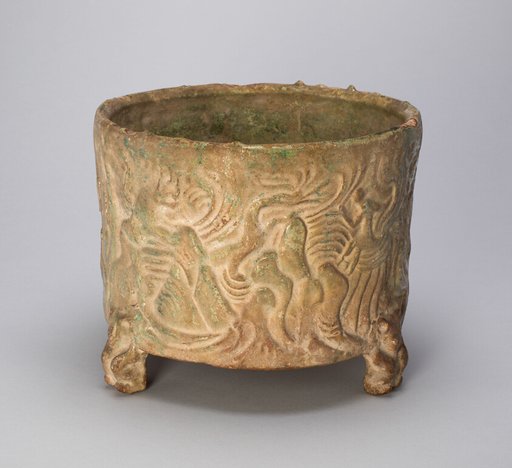
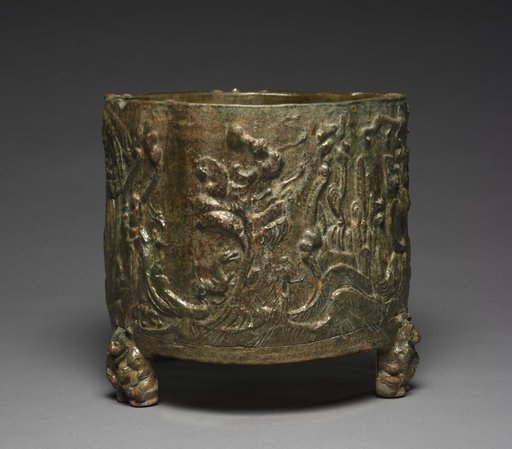
Vessels like this often are call "hill jars" since many survive with conical covers shaped in rising peaks. "Squatting bear" feet and false animal-mask ring handles are common to the group. This cylinder has been molded in two relief bands depicting hills and three populated with a medley of real and imaginary creatures. Wispy human-like figures are associated with a popular cult of Taoism prevalent in China during the Han Dynasty. The scene may represent a paradise of immortality idealized by that cult and appropriate to this vessel's offering as a burial gift. When excavated from Han tombs, similar jars have been found to hold animal bones or powder; they may have served as food or cosmetic containers. Regardless of symbolism or function, this piece provides evidence for the appearance of early landscape lost in more fragile media.
Cleveland Museum of Art’s own description