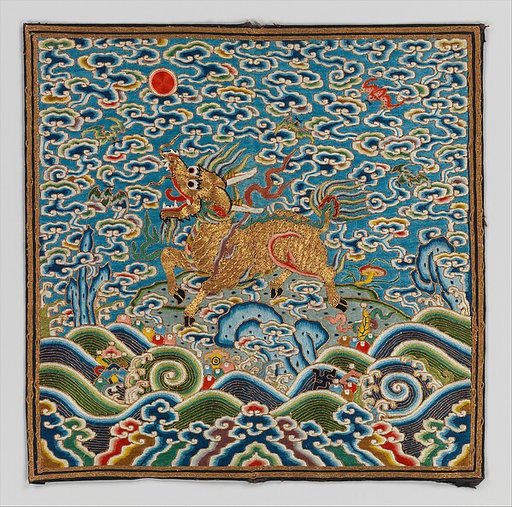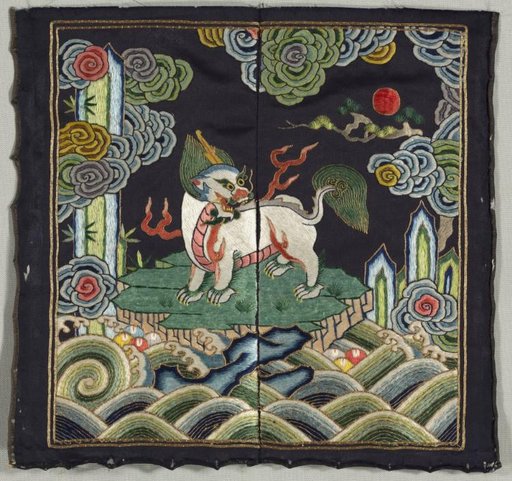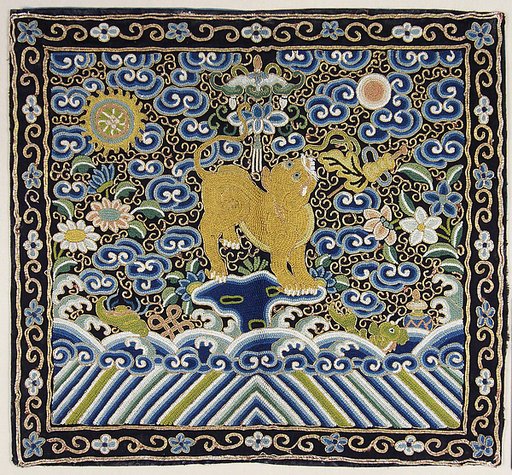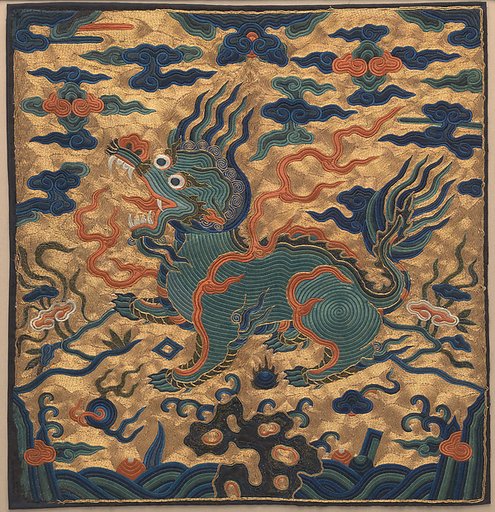
Rank Badge (buzi)
From the collection of Cleveland Museum of Art. Free to download, adapt and use — no permission needed.
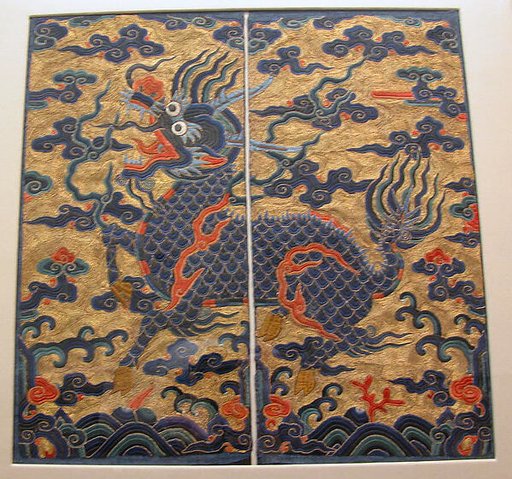
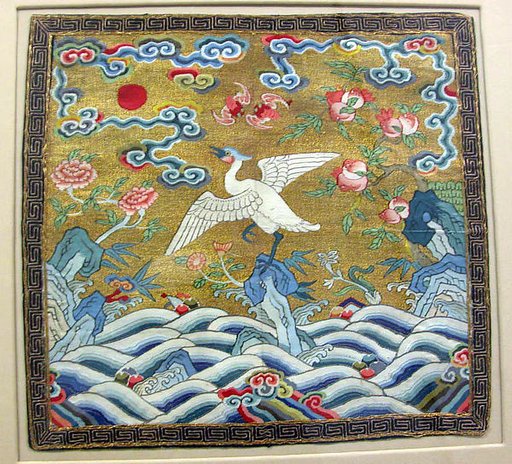
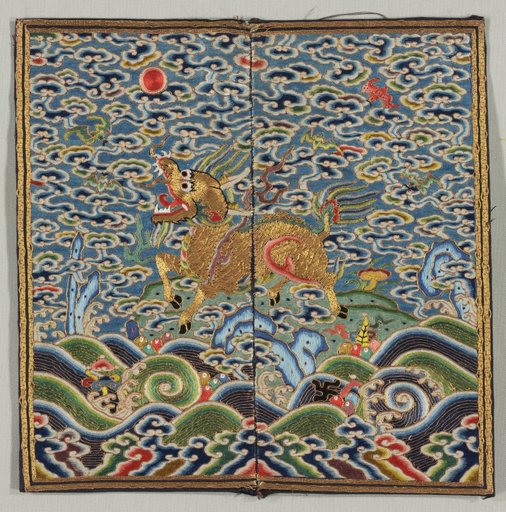
Rank badges (also called rank insignia or Mandarin squares) were used in China during the Ming (1368–1644) and Qing (1644–1911) dynasties to demonstrate the wearer’s rank. In 1391 new clothing regulations directed court officials to wear decorative squares indicating their rank—birds for civil officials and animals for military officials. During the Qing dynasty rank badge design was regulated, and certain creatures were associated with specific ranks. Qing badges depict a representation of the universe with a landscape and a central creature, surrounded by clouds and facing the sun. The sun represented the emperor and this composition showed the official’s loyalty to him. An official’s wife wore rank badges that mirrored her husband’s. Most of the examples in CMA’s collection depict creatures facing a sun on the left. Attached to the front and back of a ceremonial robe, rank badges were woven in pairs with identical imagery. One was divided vertically up the center to attach to the front of a robe with a center opening. Rank badges are generally square or rectangular, although round examples exist. They are typically satin weave or slit tapestry weave ( kesi ) silk. Satin weave badges often have dark backgrounds with silk and/or metal thread embroidery. Some badges incorporate peacock feathers or beads. Late in the Qing dynasty appliqué replaced embroidery to allow for quicker production and a change in rank.
Cleveland Museum of Art’s own description