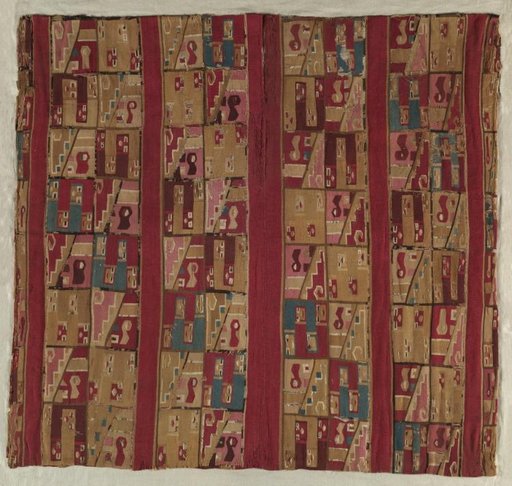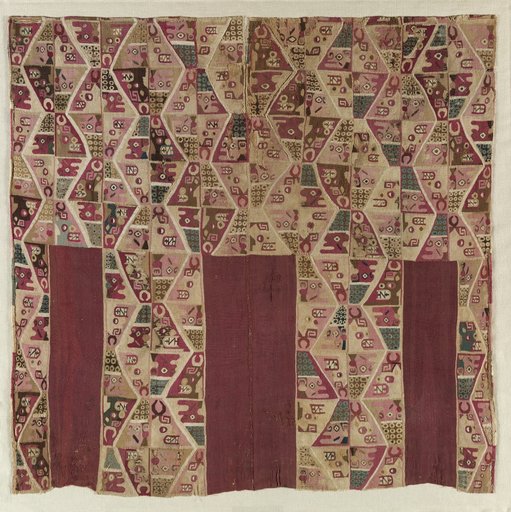
Tunic with Profile Animal and Human Heads
From the collection of Cleveland Museum of Art. Free to download, adapt and use — no permission needed.
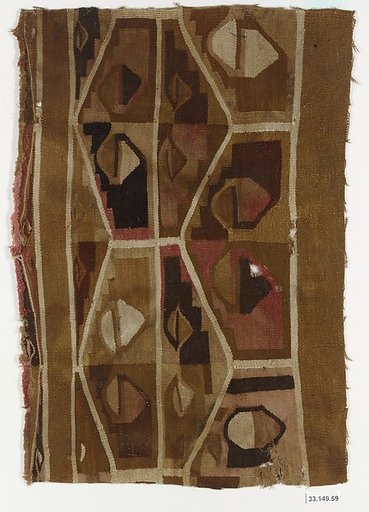
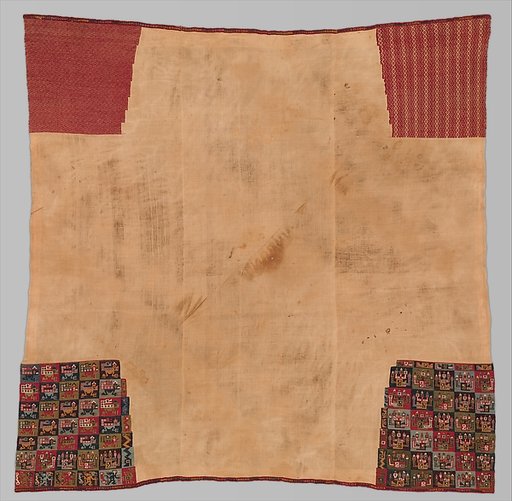
Wari tunics are made of two long panels folded at the shoulder line and stitched together at center and side seams, with openings left for the head and arms. The looms on which the panels were woven measured about 80 x 20 inches, with the warps spanning the short dimension. Thus, the warps are horizontal rather than vertical in the garment as it was worn. This orientation is unusual and seems to have influenced the construction of later Inca tunics. In this example, the imagery comprises two profile heads that alternate, one a human and the other an animal that may represent a deer or a bat. Such tunics were luxury goods worn only by privileged individuals.
Cleveland Museum of Art’s own description