CC0 · no rights reserved
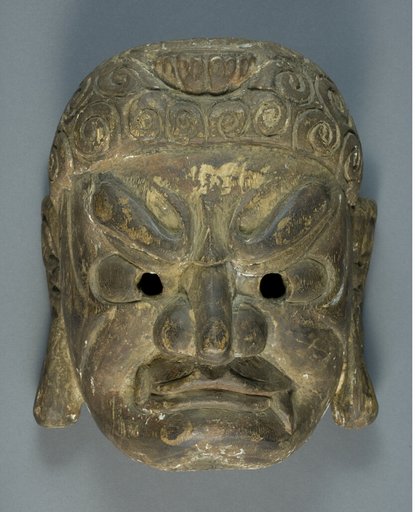
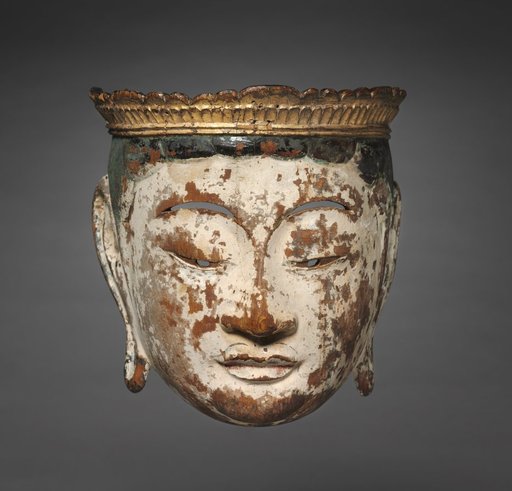
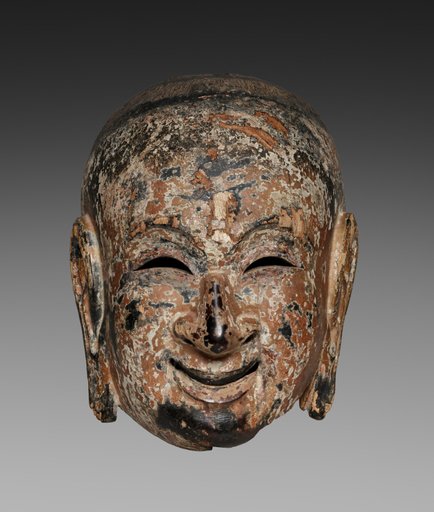
Gigaku Mask of Young Persian Boy (Taikōji)
From the collection of Cleveland Museum of Art. Free to download, adapt and use — no permission needed.
About this work
This mask is for the role of the son of an old Persian widower in gigaku , a theatrical dance repertoire imported to Japan from continental Asia during the seventh century. The old man and his sons mime prayers to the Buddha. While the mask would cover the entire head of the actor, there are openings for the eyes, nostrils, and mouth.
Cleveland Museum of Art’s own descriptionCredit lineGigaku Mask of Young Persian Boy (Taikōji) (伎楽面・太孤児), 710–94. Japan, Nara period (710–94). Paulownia wood, lacquered and painted; overall: 28 x 21 x 18.5 cm (11 x 8 1/4 x 7 5/16 in.). The Cleveland Museum of Art, John L. Severance Fund, 1949.158