Fragment
From the collection of Cleveland Museum of Art. Free to download, adapt and use — no permission needed.
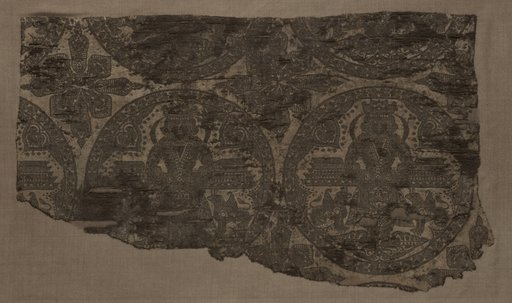
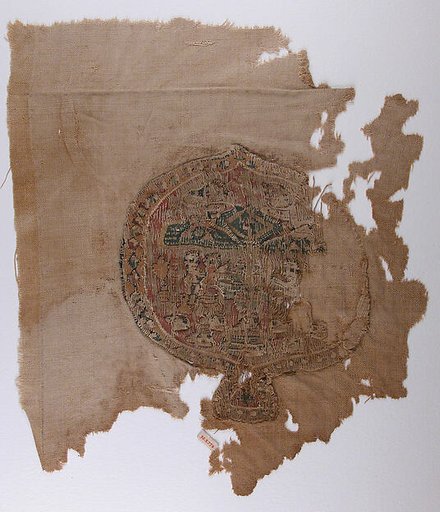
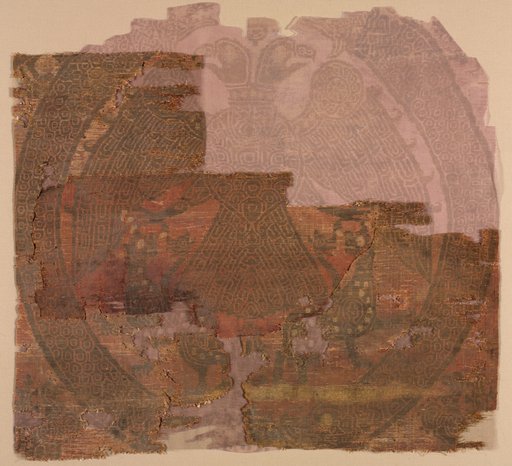
The design of this textile offers an interesting iconographic puzzle. The double-headed eagle was a common motif in the art of the Near East in ancient times and from there seems to have found its way into Byzantine and European art. The animal tail ending in an animal's head is also found in Near Eastern art and is particularly noted in textiles of the Seljuk period (1000s–1100s) in Persia. However, the division of the roundel frame into two halves ending in animal heads is not known in the art of the Near East nor is the continuous knot motif which occurs just behind the animal head of the frames. Both of these motifs are familiar in the art of the Anglo-Saxon, Germanic, and Scandinavian peoples of Europe.
Cleveland Museum of Art’s own description