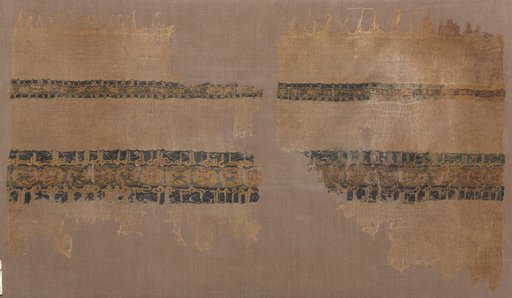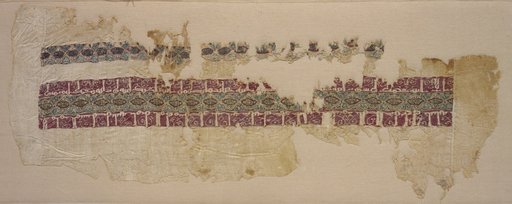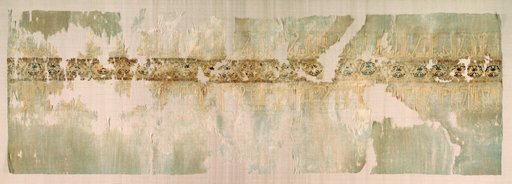
Turban end with tiraz
From the collection of Cleveland Museum of Art. Free to download, adapt and use — no permission needed.
This finely woven linen cloth, dyed a cherished pistachio color, was cut from a longer fabric worn folded and wrapped as a turban with the silk tapestry-woven decoration shown off in the front. It contains two opposing rows of nearly identical Arabic text separated by a row of medallions displaying a pair of birds. The historical text begins by praising Allah, asking that he assist the Caliph al-‘Aziz and bless him and his ancestors. The inscription also specifies that the vizier Abu ibn Yusuf ordered the cloth from the private factory (tiraz) in Tinnis. This luxurious cloth could have been a gift from the caliph in Cairo during the Fatimid period to a courtier or visiting dignitary. It is one of the finest known examples.
Cleveland Museum of Art’s own description