CC0 · no rights reserved
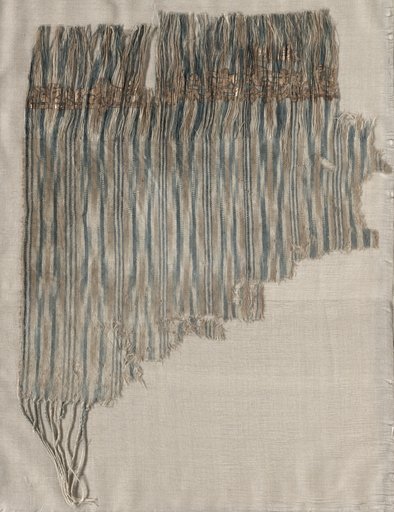
Ikat tiraz
From the collection of Cleveland Museum of Art. Free to download, adapt and use — no permission needed.
About this work
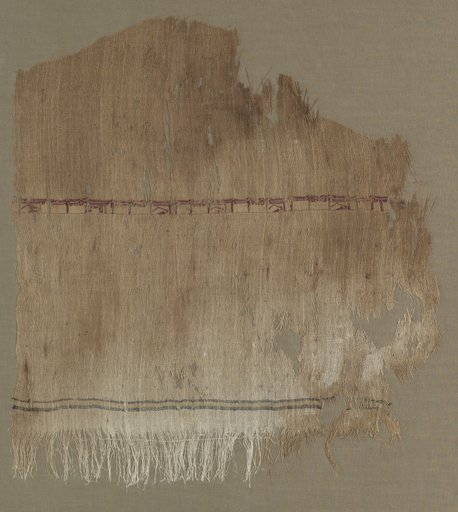
The "flame" pattern was dyed on the vertical warp threads before weaving began by tightly binding them to resist dye penetration, and repeated for each color. The process and fabric are called ikat , a Malaysian word which may have originated in South Arabia. Yemeni ikats with historical Arabic inscriptions from the 10th century are among the oldest known. This text, written in Kufic script with gold leaf outlined in black, is so damaged that it cannot be read.
Cleveland Museum of Art’s own descriptionCredit lineIkat tiraz, 900s. Yemen, San'a, Reign of Rassid Imams. Cotton and gold leaf: resist-dyed warp (ikat); plain weave with inscription; overall: 41.7 x 30 cm (16 7/16 x 11 13/16 in.). The Cleveland Museum of Art, John L. Severance Fund, 1950.524