Tiraz with gold, probably from a wide sleeve
From the collection of Cleveland Museum of Art. Free to download, adapt and use — no permission needed.
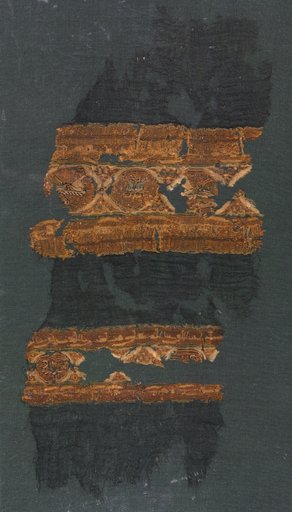
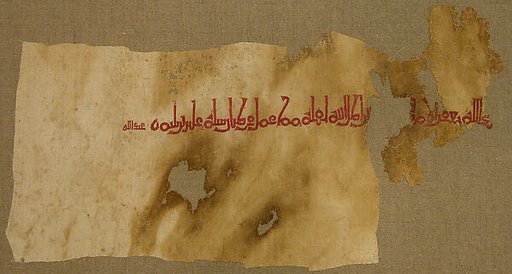
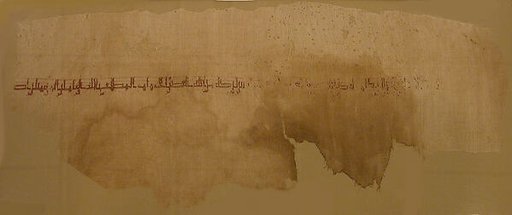
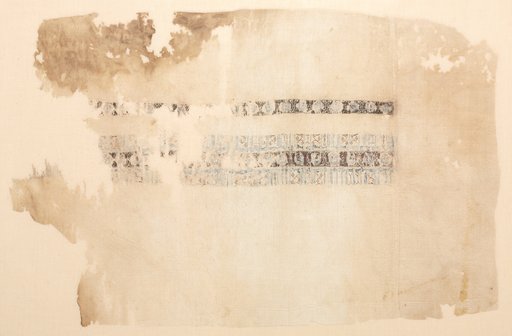
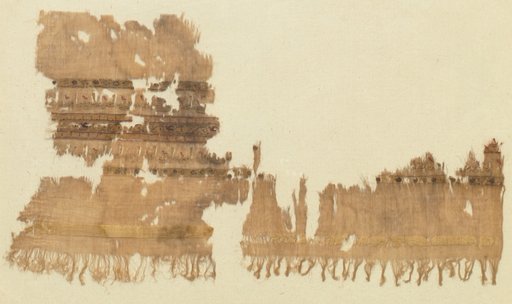
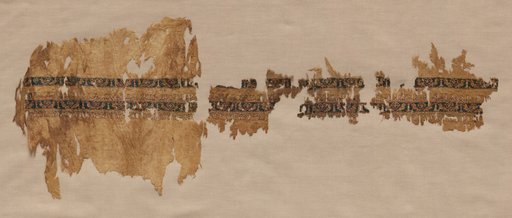
This textile with expensive gold foil is among the rarest surviving examples among thousands of medieval textiles with historic or generic inscriptions in Arabic, known as tiraz . Tiraz were "emblems of dignity," the prerogative of sovereigns and those they wished to honor. This inscription is masterful. The tall letters are woven with silk thread on only two warps in slit-tapestry weave while the ground was woven with pure gold foil wrapped around a silk core that was not beaten in—to show off its brilliance. The text begins with a prayer and provides the name of Imam al-Hakim, but lacks the place and date of manufacture. The decorative bands feature brilliant gold birds facing simplified trees alternating with popular palmette-decorated hearts. This tiraz fragment may have been part of a wide sleeve that functioned as a receptacle because clothing didn’t have pockets.
Cleveland Museum of Art’s own description